Memory in Flux: an Intergenerational Portrait of Svalbard
Review of Layers of Time – Everyday life in Svalbard (Tidslag - Hverdagsliv på Svalbard) at Nordnorsk Kunstmuseum, 25.01.25 - 12.10.25, Tromsø
Nordnorsk Kunstmuseum’s exhibition Layers of Time – Everyday life in Svalbard, successfully conveys the past with warmth and authenticity and carries the potential to be a layered conversation about memory, place, and transformation. However, it lacks geopolitical anchorage, making for an interesting but, at times, rather superficial viewing experience.
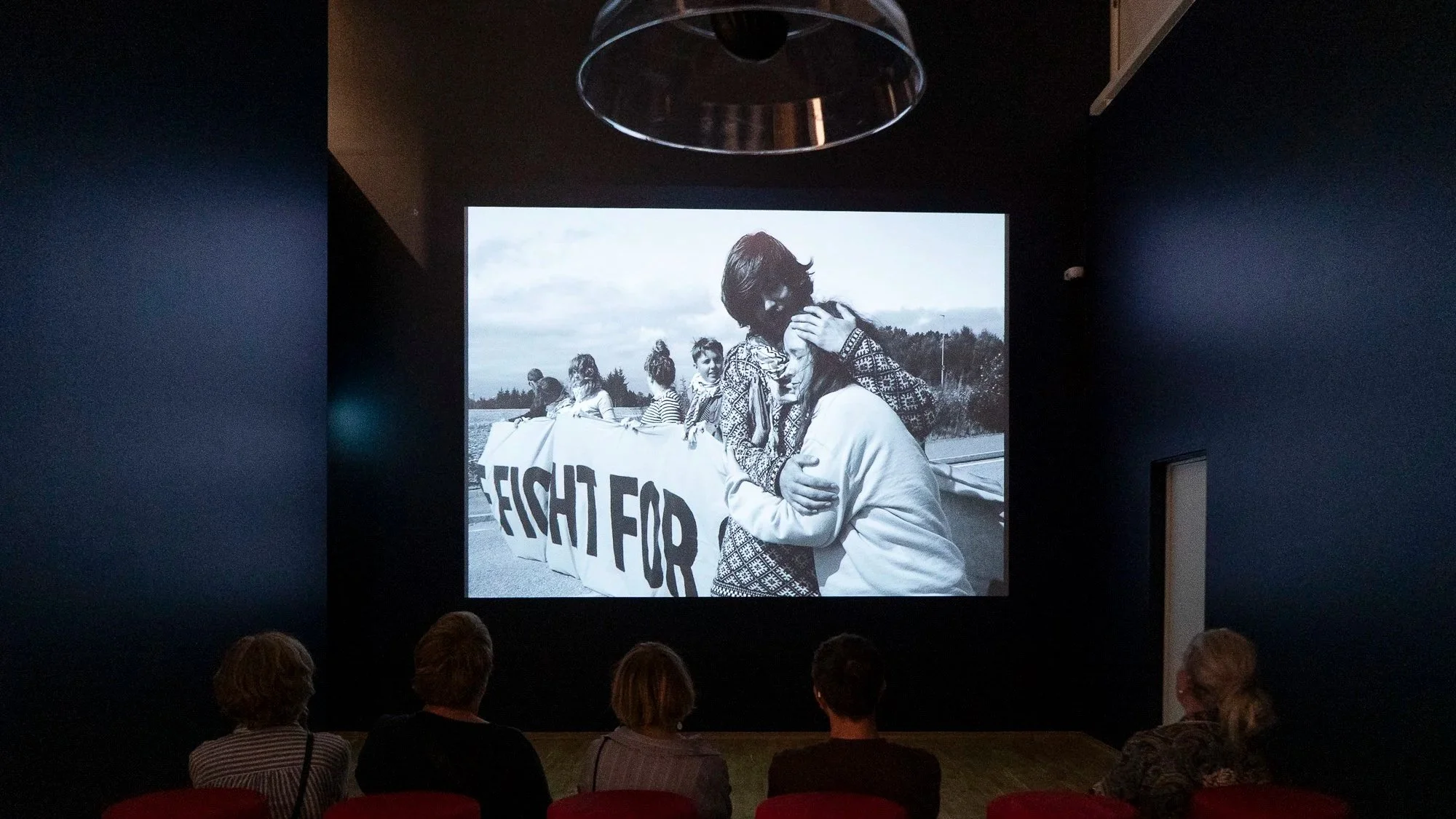
There is something deeply evocative about a photograph that captures an era long past—a glimpse into another time, another rhythm of life. The exhibition Layers of Time – Everyday life in Svalbard takes this nostalgia and builds upon it, weaving together past and present through the lens of three generations. With the photographs of Herta and Leif Grøndal spanning from the 1950s to the late 1990s, re-photographed by their daughter Eva Grøndal, and set to a musical score by granddaughter Aggie Grøndal Peterson, the exhibition fills up three rooms at Nordnorsk Kunstmuseum.
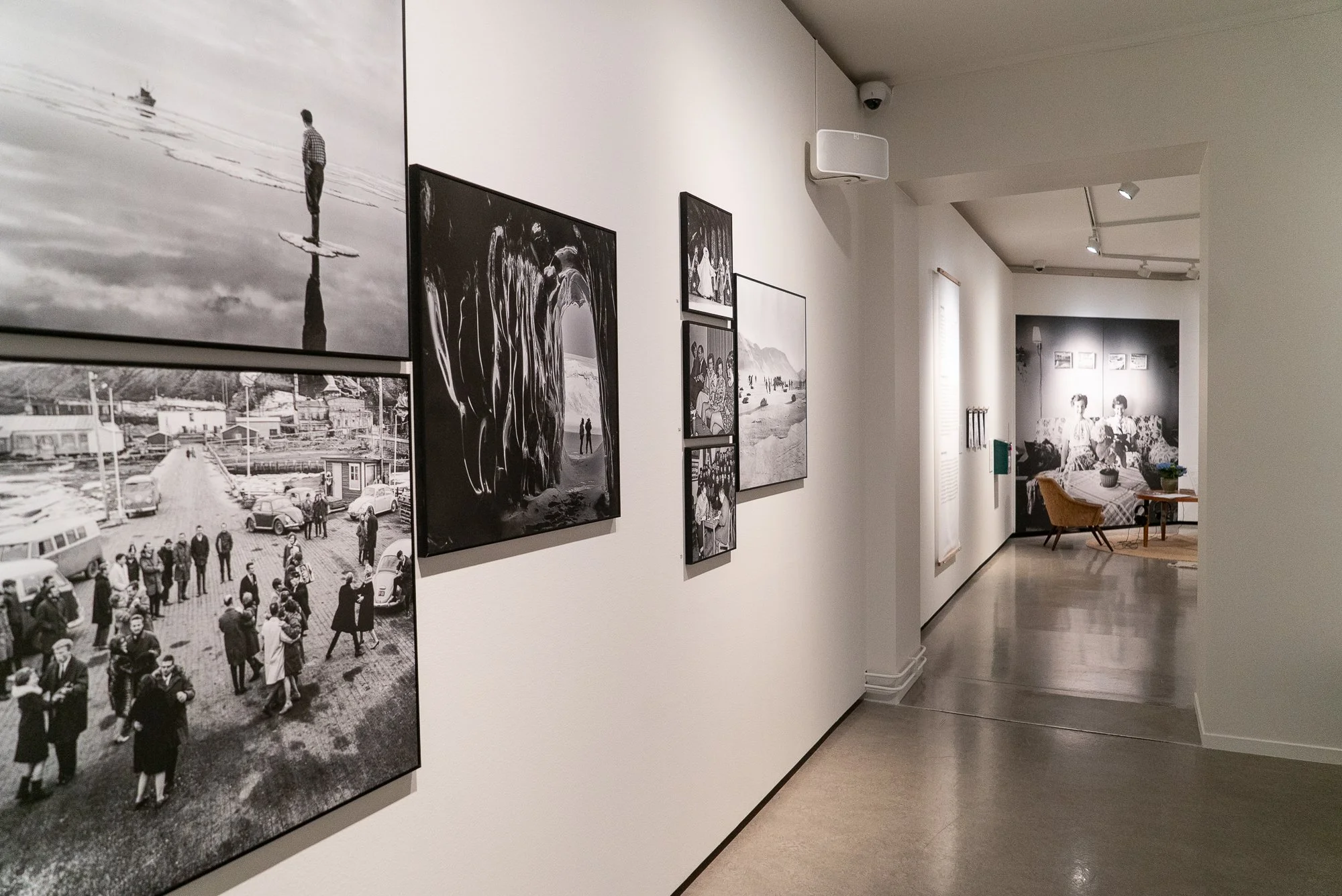
Layers of Time has the look of a conventional historical exhibition more than an art exhibition—black-and-white snapshots of miners, hunters, and families braving the Arctic elements, juxtaposed with contemporary reinterpretations. But it is in its accessibility and its quiet, personal nature that it finds its strength. The images, often deeply intimate, depict life as it was: moments of camaraderie, the stark beauty of the landscape, and the everyday joys and sorrows in a place that, for most of us, is so remote. Brought together, the photographs conjure a time when hunting polar bears and playing with their cubs were common pastimes, when a single ballroom provided the social highlight of the week after long days in the mines. It is a world that feels both distant and tangible.

An intimate evocation of times past
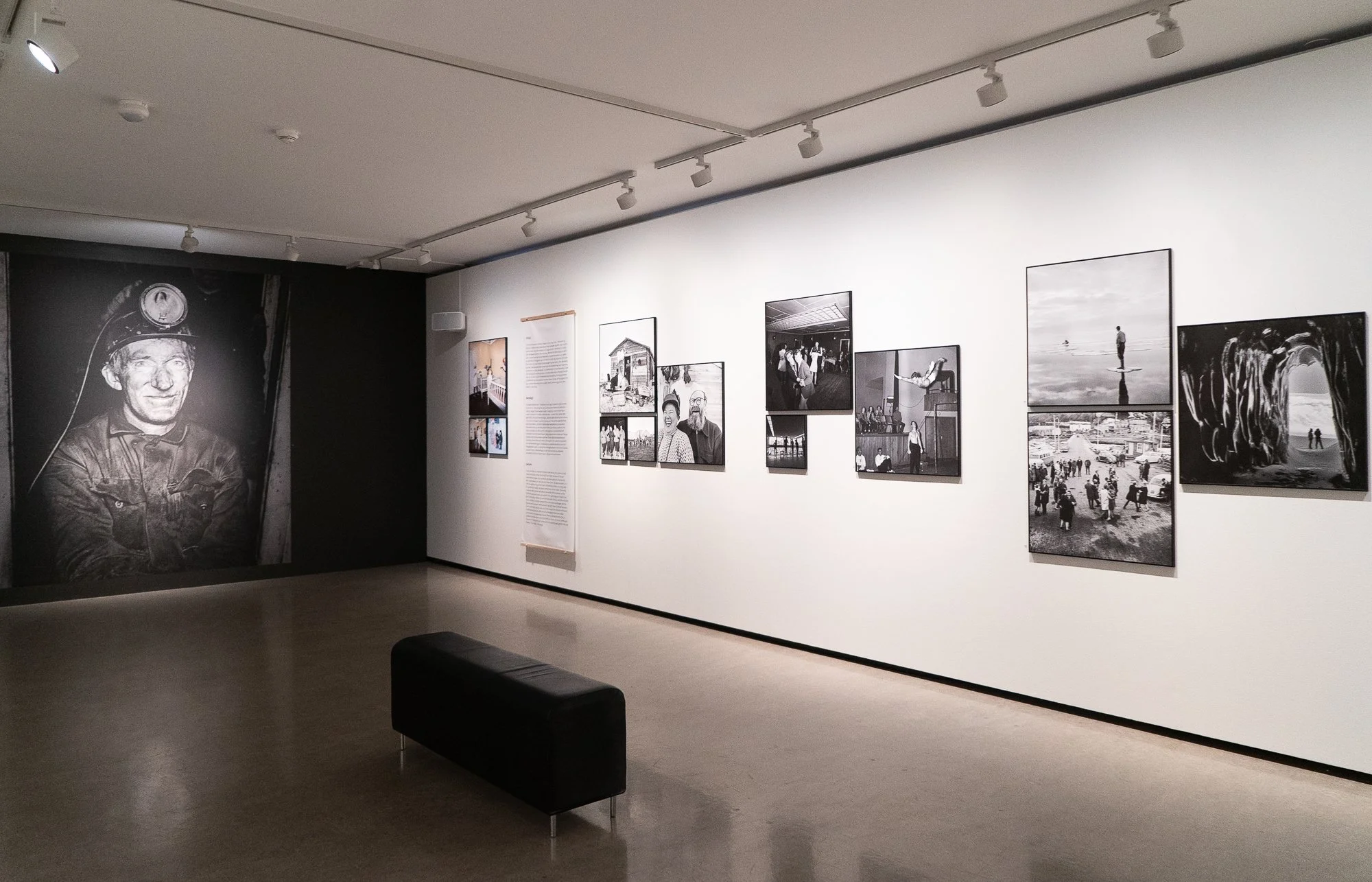
The exhibition layout is created to immerse visitors in Svalbard’s visual history. Upon entering, we are immediately plunged into the stark realities of life in Longyearbyen through black-and-white photographs by Herta and Leif Grøndal. These images, portraying the town’s highs and lows, its darkness and light, create an arresting first impression.
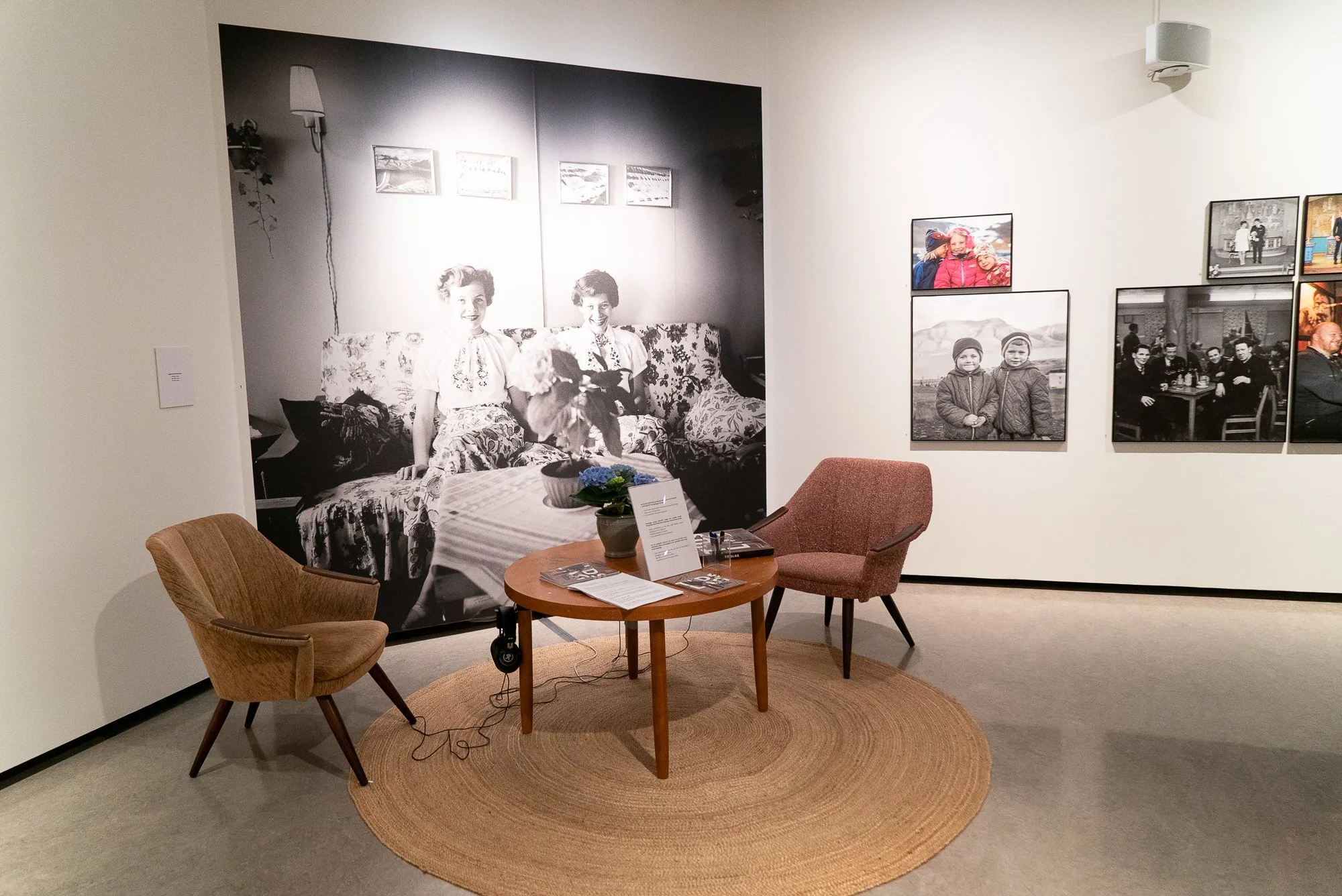
A wall-covering photograph of a miner adorns the left inner wall, leading us into a shadowy, cave-like space. Here, equipped with helmets and headlamps, visitors explore more black-and-white images in a dimly lit environment, mimicking the atmosphere of the mines that shaped so many lives on the island.
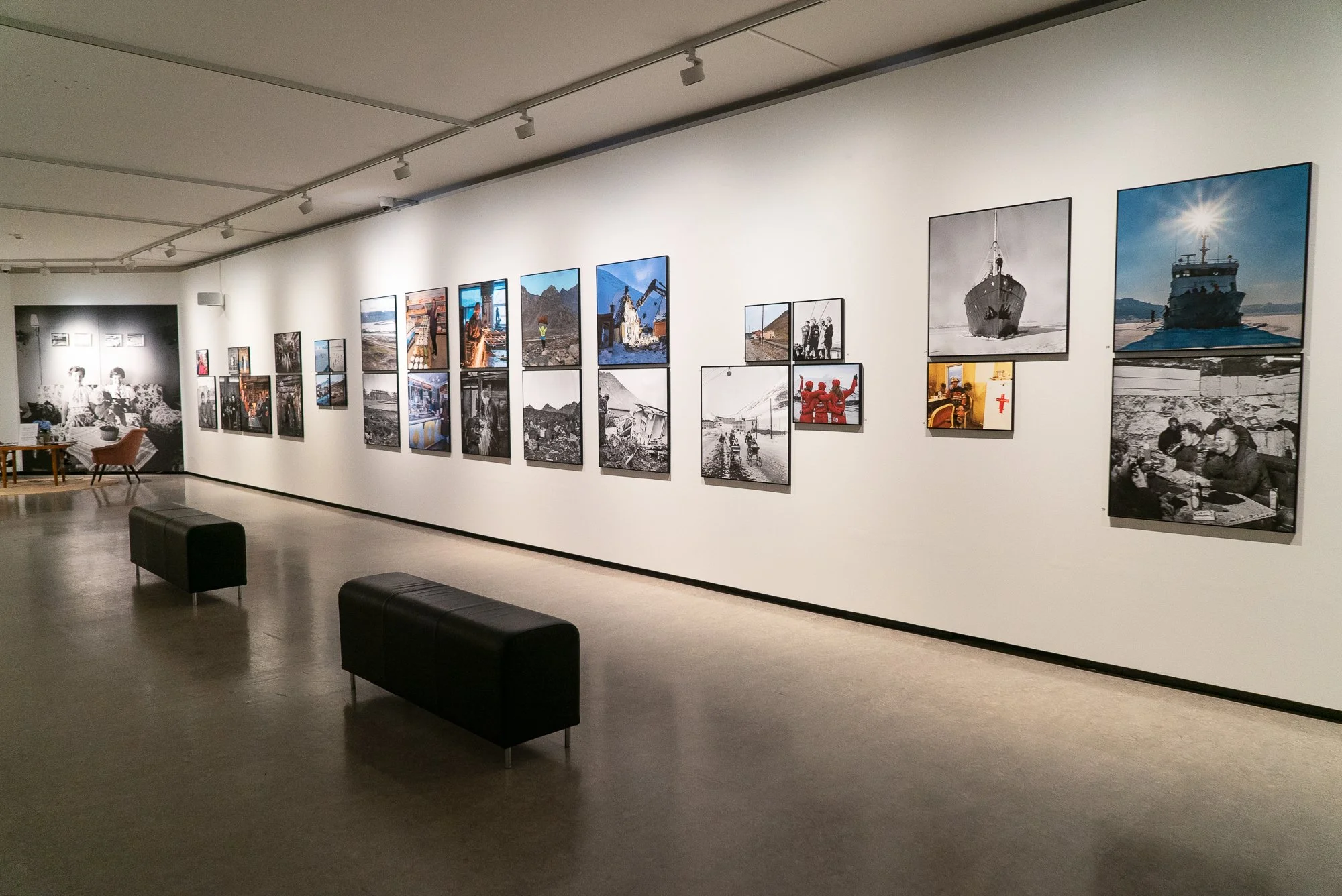
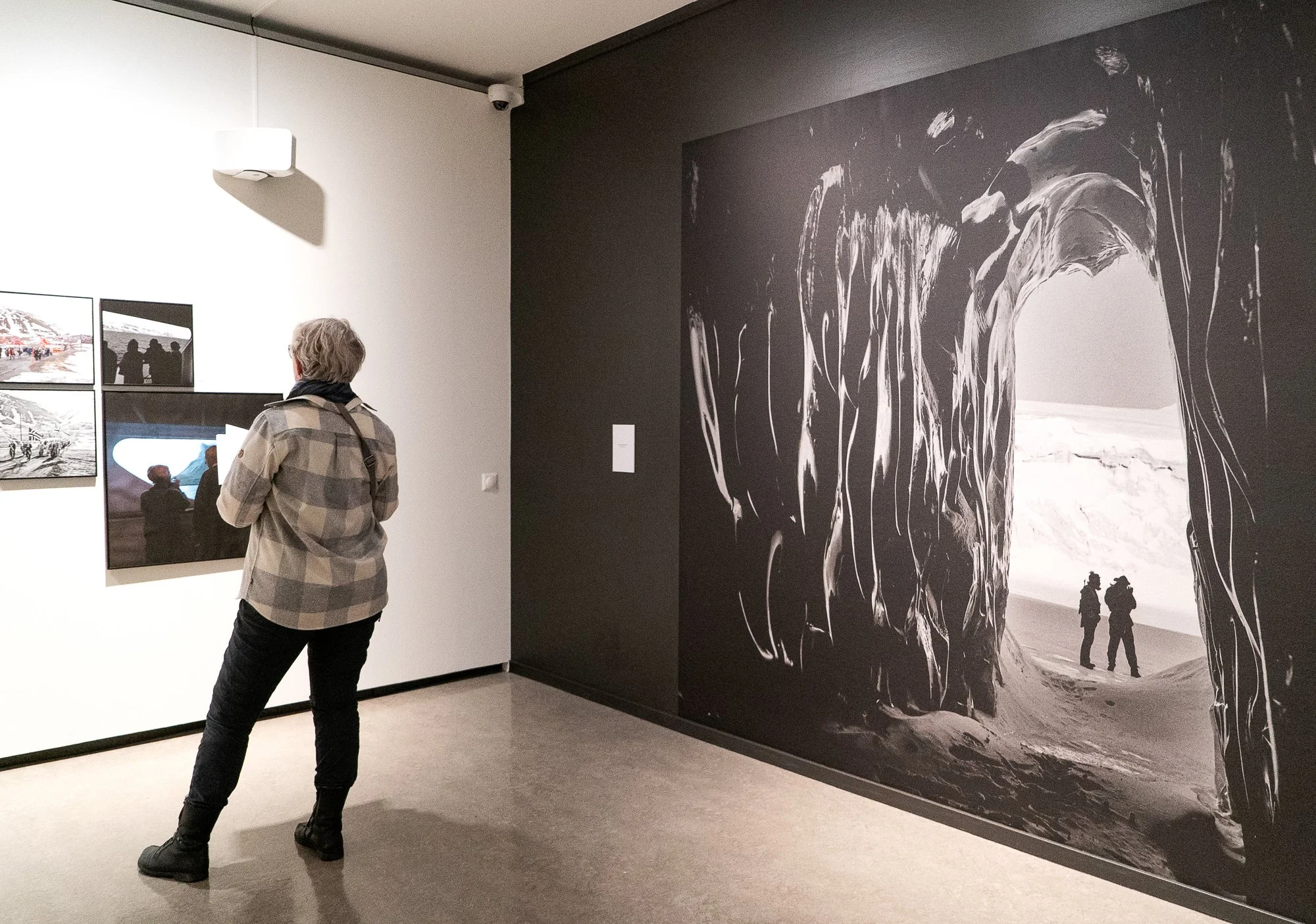
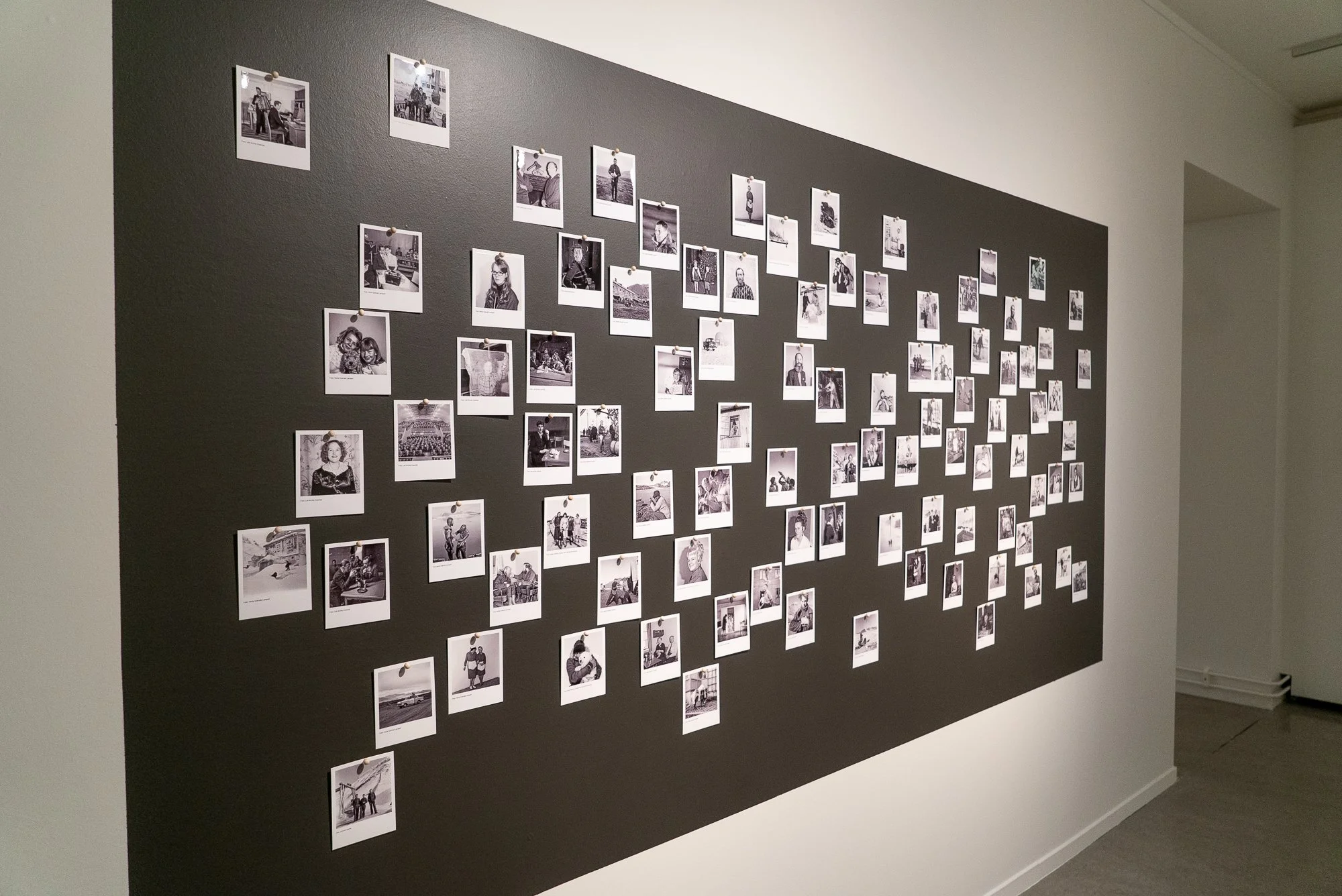
The second and largest room brings the past and present into direct dialogue. One wall is covered with the original black-and-white photographs by the Grøndals, while beside each image hangs its contemporary counterpart, re-photographed in color by Eva Grøndal. This juxtaposition highlights the ways in which Svalbard has changed—or, in some cases, eerily remained the same. On the opposite wall, a selection of photos has been re-printed in Polaroid format, a choice that adds a layer of immediacy and nostalgia. The use of Polaroids, a medium associated with personal snapshots and fleeting moments, reinforces the exhibition’s theme of memory and preservation. Visitors are invited to interact by writing down memories or identifying people and places they recognize, making the exhibition not only a historical record but also a living, participatory archive.
Three generations bridge the gaps of history
The musical compositions by Aggie Grøndal Peterson add another evocative layer to the exhibition. In the first room, three tracks accompany the photographs, blending field recordings, ambient music, and archival voices that seem to emerge from the past. One particularly moving piece, Polargirl (2024), features snippets of an interview with Eva Grøndal recounting a snowmobile trip gone wrong, woven into a dreamlike soundscape. The composition fuses sounds from the engine room of the boat MS Polargirl, noises from the mine, and ethereal singing, creating an atmospheric bridge between past and present. In the second room, the song Heart of Coal (2024) revolves around the mines, incorporating geophone-recorded mining sounds that resonate and reverberate throughout the track. These compositions stand out as the most immersive aspect of Tidslag, truly uniting generations and transporting the audience from Tromsø to Svalbard through sound. In a way, the music alone achieves what the exhibition itself aspires to: a sensory experience that forges a tangible connection between place, history, and memory.
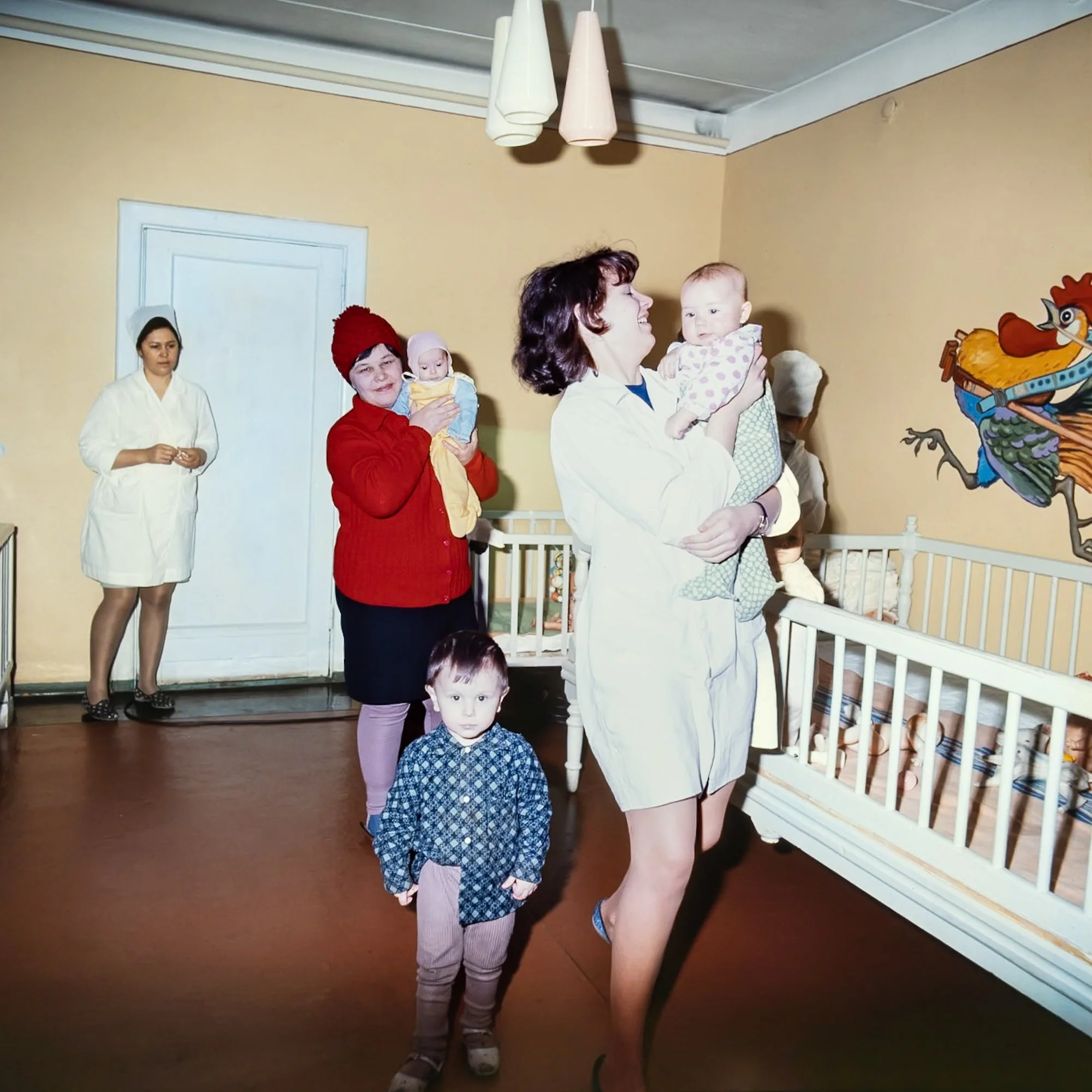
Throughout the exhibition, there is indeed the underlying question of continuity and change. Longyearbyen’s transient population arguably makes historical preservation a challenge—what memories endure, which experiences are passed down, and which are lost in the constant flux of newcomers? The exhibition can also be an invitation to reflect on shifting roles and expectations: the evolution of gender dynamics, labor, and social hierarchies, as well as the undeniable imprint of climate change on Svalbard’s landscape.
A particularly interesting aspect of the exhibition is its multi-generational collaboration. The involvement of three generations of the Grøndal family creates an organic thread between past and present, bridging time through the intimate act of documentation. The fact that Aggie Grøndal Peterson, the composer of the exhibition’s music, lives in Tromsø—where the museum is located—adds another layer of significance. This intergenerational effort not only reinforces the exhibition’s themes of memory and continuity but also speaks to the way history is both preserved and reinterpreted by those who inherit it.
A mandated exhibition that chooses nostalgia over pressing issues
This exhibition is undeniably a project with political undertones, knowing that the Nordnorsk Kunstmuseum was mandated to program and curate the exhibitions at the Nordover Art Center in Longyearbyen. This project is obviously a spillover of the institutional decision to bridge the gap between Svalbard and the mainland. In this endeavor, this exhibition is only partially successful; the vast geographical and cultural gap it seeks to close remains perceptible. The exhibition stays close to the people, rooted in the everyday and the historical, which may leave some visitors questioning whether it belongs in an art museum otherwise dedicated to more provocative contemporary art, including – in my experience – groundbreaking Sámi exhibitions and avant-garde installations, such as There is No (2017), Gába – kvinnelig skaperkraft (2023), or A Worm's Eye View from A Bird's Beak (2024) amongst others.
More importantly, the exhibition willingly avoids any mention of the current geopolitical challenges surrounding Svalbard. I found no reference to its strategic position in the Arctic, nor to the renewed interest from Russia and the United States in opening Arctic routes and mining—not down into the ground this time, but under the sea. In the end, the omission feels like a missed opportunity to engage with the contemporary social and geopolitical relevance of Svalbard’s changing landscape.
Ultimately, Tidslag remains caught between two ambitions. On one hand, it is an intimate, well-executed exploration of memory and personal history. On the other, it is a museum-driven project that shies away from broader contemporary discussions, limiting its impact. While the exhibition successfully conveys the past with warmth and authenticity, it lacks the depth and urgency that could have made it truly compelling. The result is an exhibition that is visually and emotionally engaging, but ultimately feels like a safe, politically neutralized presentation of Svalbard—one that chooses nostalgia over necessary confrontation with the present.