100 years of fostering communities and supporting artists in Tromsø
Interview with Camilla Fagerli, director of Tromsø Kunstforening / Romssa Dáiddasiida / Tromssan Taitopiiri (TKF) and curator Ruth Alexander Aitken about TKF’s Jubilee Exhibition History is the Dream of What We Can Be (Historie er drømmen om det som kan bli).
This year Tromsø Kunstforening (TKF) celebrates 100 years of fostering communities and supporting artists in Tromsø. In conversation with writer Silvia Colombo, director Camilla Fagerli and curator Ruth Aitken shares insights on the work, research, and creative processes that led to the jubilee exhibition and the accompanying publication.
Tekst by Silvia Colombo
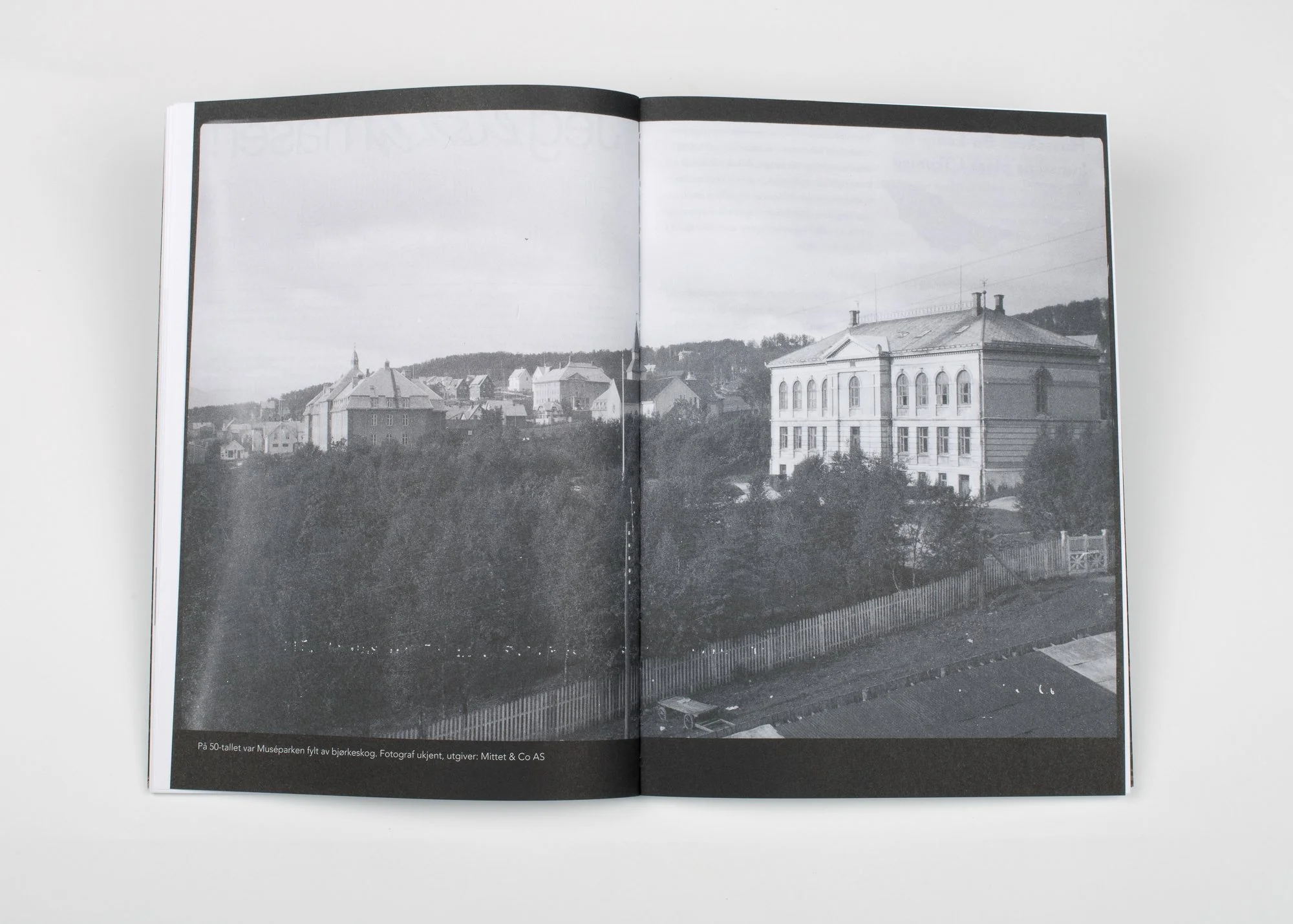
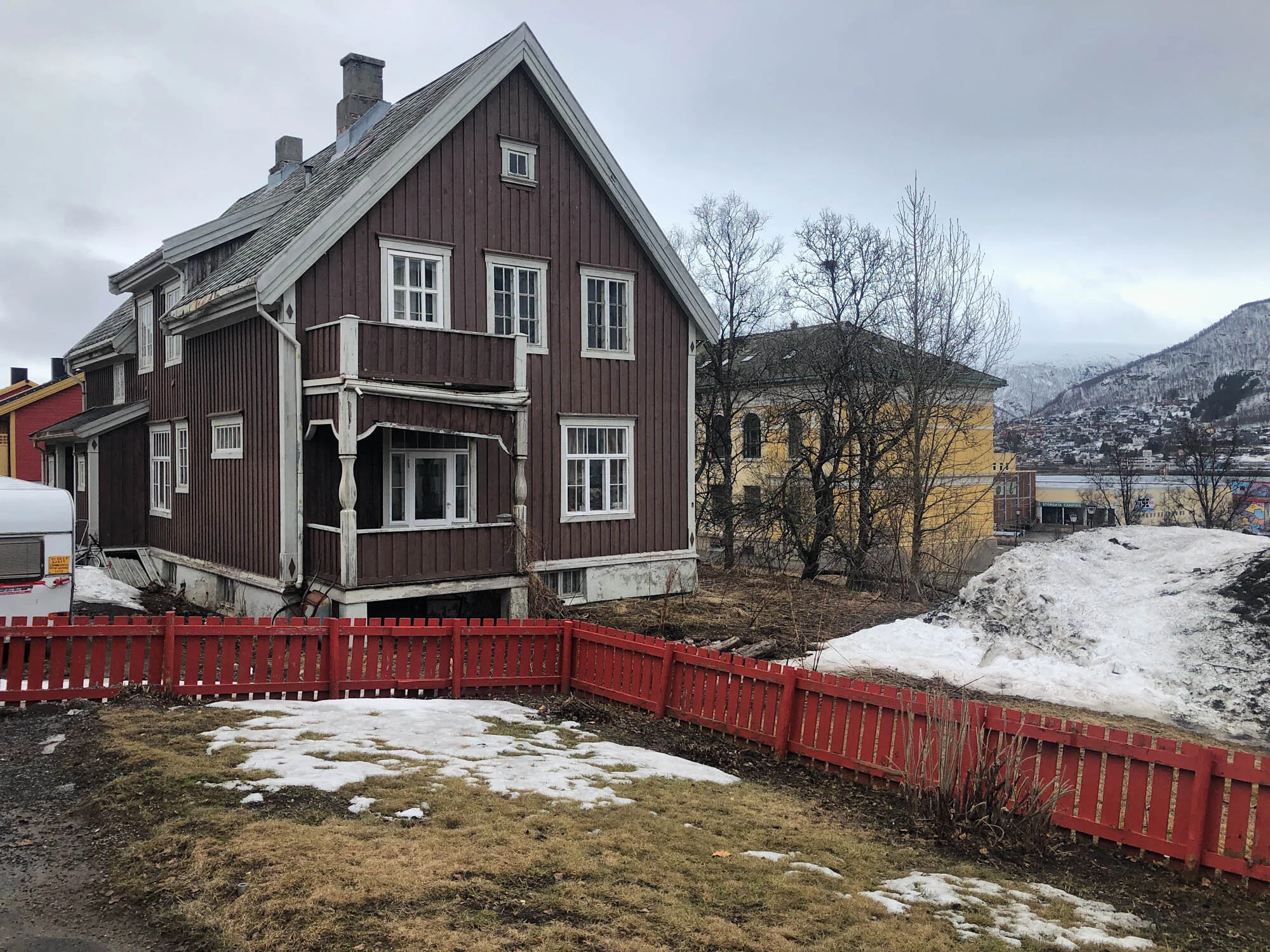
While both the 90th and 95th anniversary happened in Tromsø Kunstforenings’s main building in Muségata 2, this year’s exhibition is taking place in the institution’s temporary home; the old nursery Hvilhaug in Mellomvegen 95, (due to their actual building being renovated). However the old building in Muségata 2 plays an important part in the history they are now celebrating.
The artist Idar Ingebrigtsen (1917-2004), a Tromsø artist who studied in Copenhagen, was central to the association’s history and particularly to the building in Muségata 2, where he and his partner Eka took part in securing a permanent home for TKF.
It was Idar and Eka who took over the place in the early 1960s, saving the building from demolition, and overnight, they turned it into a self-organized cultural house. It hosted children’s theatre, puppet theatre, artist studios, exhibitions organized by TKF, and band rehearsal spaces. Many of Tromsø’s largest cultural institutions such as Hålogaland Teater, Hålogaland Amatørteaterselskap, and Nordnorsk Kunstmuseum all began there, the latter sharing the building with TKF.
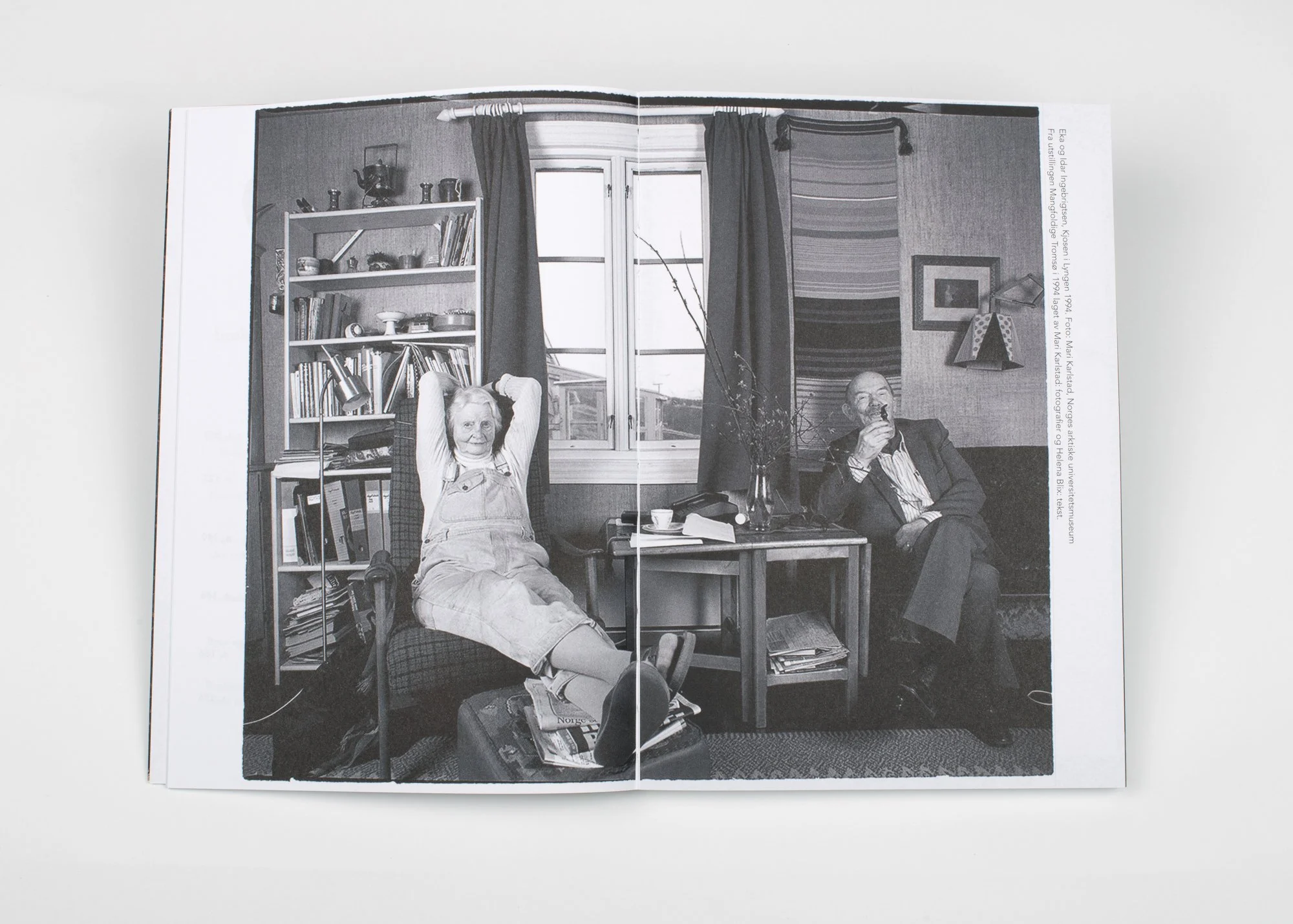
Idar and Eka’s thinking and approach has become an important part of the institution’s identity and ethos through the jubilee work. After Idar passed away in 2004, his studio remained largely untouched, filled with artworks, notes, letters, and other archive material. Many of the concepts—and even the title of the anniversary book—of this year’s exhibition History is the Dream of What We Can Be, come from IdarIngebrigtsen’s writings and his and Eka’s ideas continue to inspire this centenary exhibition.
Silvia Colombo: How has the preparation for this year’s jubilee exhibition unfolded?
Camilla Fagerli and Ruth Aitken: Preparation for the exhibition has been layered. We conducted archival research, explored historical perspectives, and interviewed people who know TKF closely. Co-editor of the anniversary book Dovenskap, Fantasi & Felleskap (Idleness, Imagination & Community), Henrik Sørlid, led much of the work going through TKF’s archive at the National Archives of Norway (Statsarkivet) among else. We also drew on materials from the previous anniversaries and Idar Ingebrigtsen’s studio archives, parallel to collaborating with the artists, some of them also across several years, following their research and processes.
The building up to Tromsø Kunstforening’s 100 year anniversary began more than ten years ago, long before the two of us started working here. For the 90th anniversary in 2015, four local artists were invited to develop new works by curator Hanne Gudrun Gulljord and assistant curator Martina Petrelli. At the same time the two artist run initiatives Tromsø People’s Kitchen and Mondo books moved into our premises. This laid the foundation for how jubilees have been approached ever since, emphasizing traditions of oral storytelling, the role of self-organization in the art scene and inviting artists living in Tromsø to engage with our history and the broader historical and contemporary social context that we are part of.
The 95th anniversary included five local artists and artist collectives, including programmes run by three artist run initiatives. So, for this current jubilee exhibition, we didn’t start from scratch—it builds on more than a decade of curatorial work.
Our approach to the anniversaries has not been to try to compile the history of TKF from A to Z, but rather to look at moments in the history that feels inspiring and relevant to the situation we find ourselves in today.
SC: How has TKF changed over the years, and what do you see as the most significant developments?
CF&RA: The building in Muségata 2, without a doubt. It was when TKF moved in there that it got its first paid position and started growing into a professional art institution. That first director was art sociologist Dag Solhjell, and he led the renovation of the building before it opened in 1981. When we asked him what he saw as most important for the development of the institution, his answer was the art academy. It was only in 2007 that the northern region got an art academy, and that has contributed to a more active, lively and internationally connected art scene.
The ideas about the role of art and what it means to run an art institution have of course changed a lot. But our organizational foundation and structure as an association remains the same – anyone who supports our aim to mediate art can become a member, and it is our members who choose our strategy and who will be on the board, which continues to consist of unpaid, voluntary positions. The collective democratic structure that underpins everything we do has been around for a whole century.
SC: Is there anything new you’ve learned during the research for the jubilee exhibition?
CF&RA: This does not feel like a surprise anymore, but along the way of this decade of connecting to our history, it has become clear to us what an important role artists’ political work and organizing on behalf of the arts has had for the development of the cultural infrastructure in the north. That has worked as a confirmation of our institutional practice collaborating closely with the self organized scene as actually nothing new but a continuation of a strong tradition.
During the research for the book, art historian Irene Snarby told us that at a time where Sámi artists still were struggling to gain recognition for their work from art institutions in Oslo, collaborating with Sámi artists was standard practice at TKF. That doesn’t fix the fact that Tromsø is still lacking a Sámi art institution, but it was in all honesty a surprise to us.
SC: It’s interesting that the publication includes, among others, also a text by author Elin Anna Labba. Could you share your thoughts on that choice?
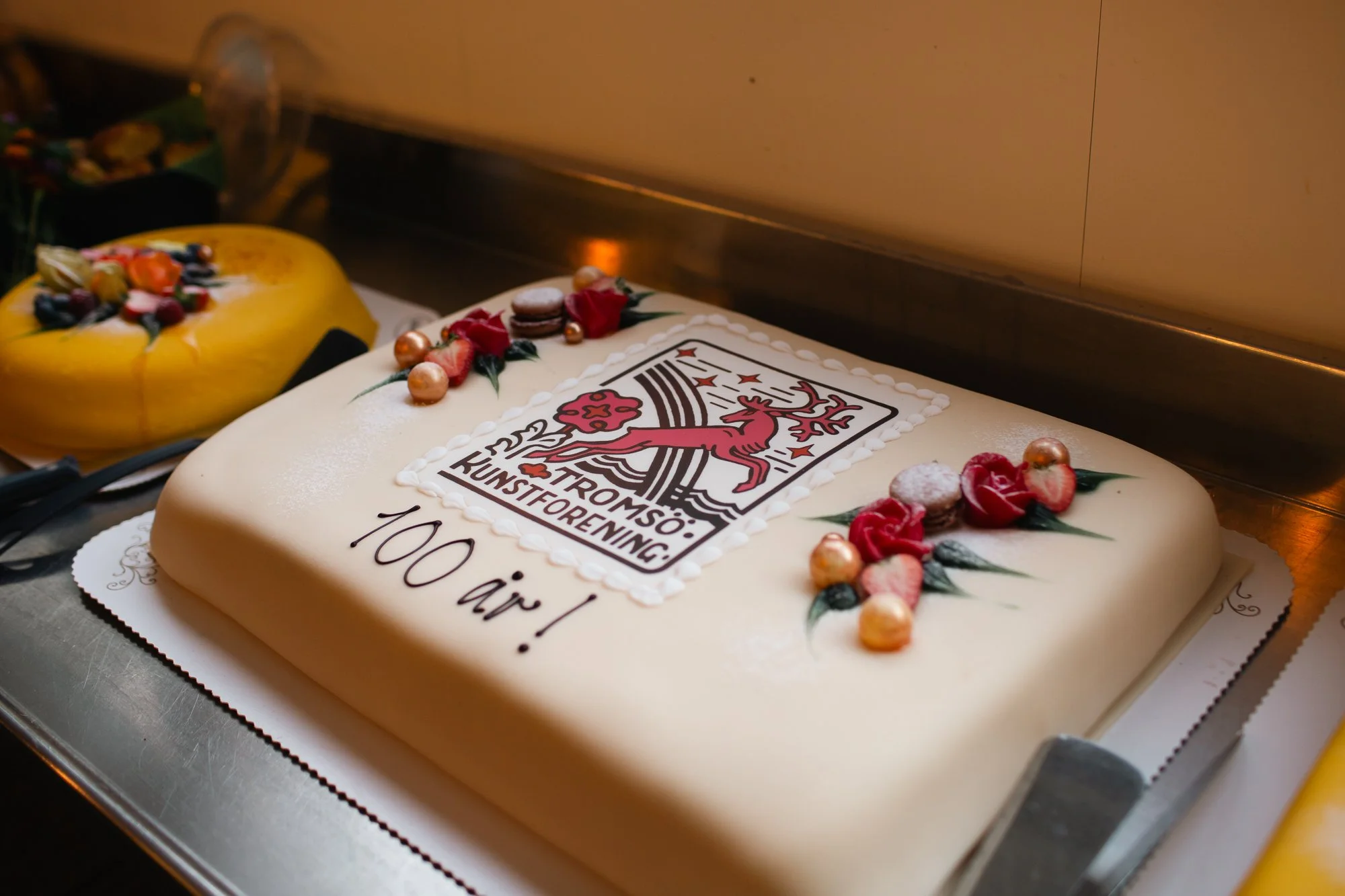
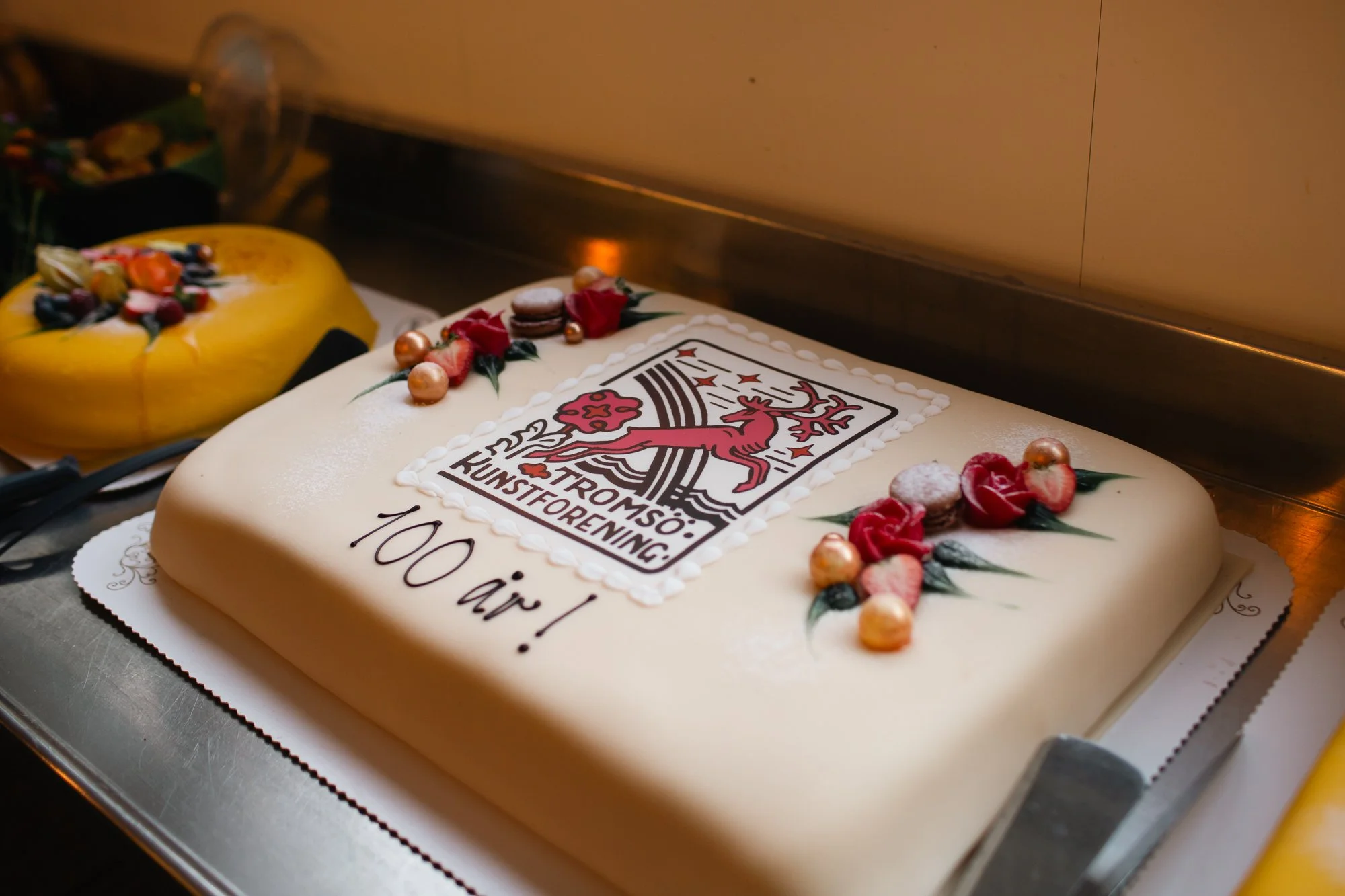
CF&RA: Even though Tromsø is the city in Norway with the largest Sámi population, the overall society is currently in a stage of recognizing its Sámi history. Elin Anna Labba has made an important contribution to the local groundwork. Together with archeologist Stine Benedicte Sveen she conducted the cultural heritage report from Rávdnjevággi/Finnheia on Sállir/Kvaløya in 2018, and her book from 2020 The Rocks will Echo our Sorrow (Herrarna satte oss hit) about the forced displacement of Sámi reindeer herding families has become central to the renewed public awareness of Tromsø’s Sámi history. The forced displacement happened around the same years as Tromsø Kunstforening was established, and ironically, our first logo from 1924 shows a reindeer. Elin Anna’s short fiction novel for our anniversary book places us in Tromsø at this point in time from a Sámi perspective, right before the forced displacement took place.
SC: What is the relationship between TKF and the city today, and how has that evolved?
CF&RA: When TKF moved into the museum building in Muségata 2 in 1981, membership surged, and word has it that almost every inhabitant of Tromsø became a member of the association. The move made TKF central to city life, strengthening its role as a cultural hub. Today, membership is smaller, around 140 people, reflecting broader changes in civic engagement and people’s time commitments. People are less likely to volunteer for associations unless personally invested, but TKF continues to foster community and creativity, maintaining its position as a vital part of Tromsø’s cultural ecosystem.
SC: In curating this jubilee exhibition, you’ve chosen to work with a diverse group of artists. Can you tell us a bit about their projects and what led you to select these artists?
CF&RA: We have asked ourselves the question: What if an art institution like TKF would have seen local aesthetic practices as relevant to an art context at our beginning 100 years ago? In that case, how would the northern art scene and cultural infrastructure look like today? This has been a driving question for the 100 year anniversary. It remains unanswered of course, but it has sparked a lot of the thinking and choices we have made.
Speaking of selection of artists, the artists themselves have chosen each other as much as we as curators have, it is very much in a spirit of collaboration. The first concrete steps started in 2021, when we started working on a long-term outdoor program for Muséparken, the park area outside Muségata 2, in collaboration with Hilde Hauan Johnsen, Joar Nango and Kåre Aleksander Grundvåg, focusing on urban biodiversity and traditional practical knowledge sharing. Up until the beginning of the 18th century a place in the area was called Finngamsletta, referring to its history as a Sámi and Kven settlement. The first step of the project, the mobile kittiwake hotels, was realized as part of a collaboration between Kåre Grundvåg, Kjeld Nash from AT Architecture, artist Lawrence Malstaf and Tromsø municipality with great success, but the remaining steps are still unrealized, so they are part of the exhibition as proposals for the future. In this anniversary exhibition, Joar Nango and collaborators present a sketch for Vuoššangoahti / Kokegamme, a space inspired by the bealljegoahti and the gárbbis (a clinker-built Nordland boat), including an 8 meter long work/kitchen bench for which Marit Bockelie has made sketches for mosaics to be incorporated into.
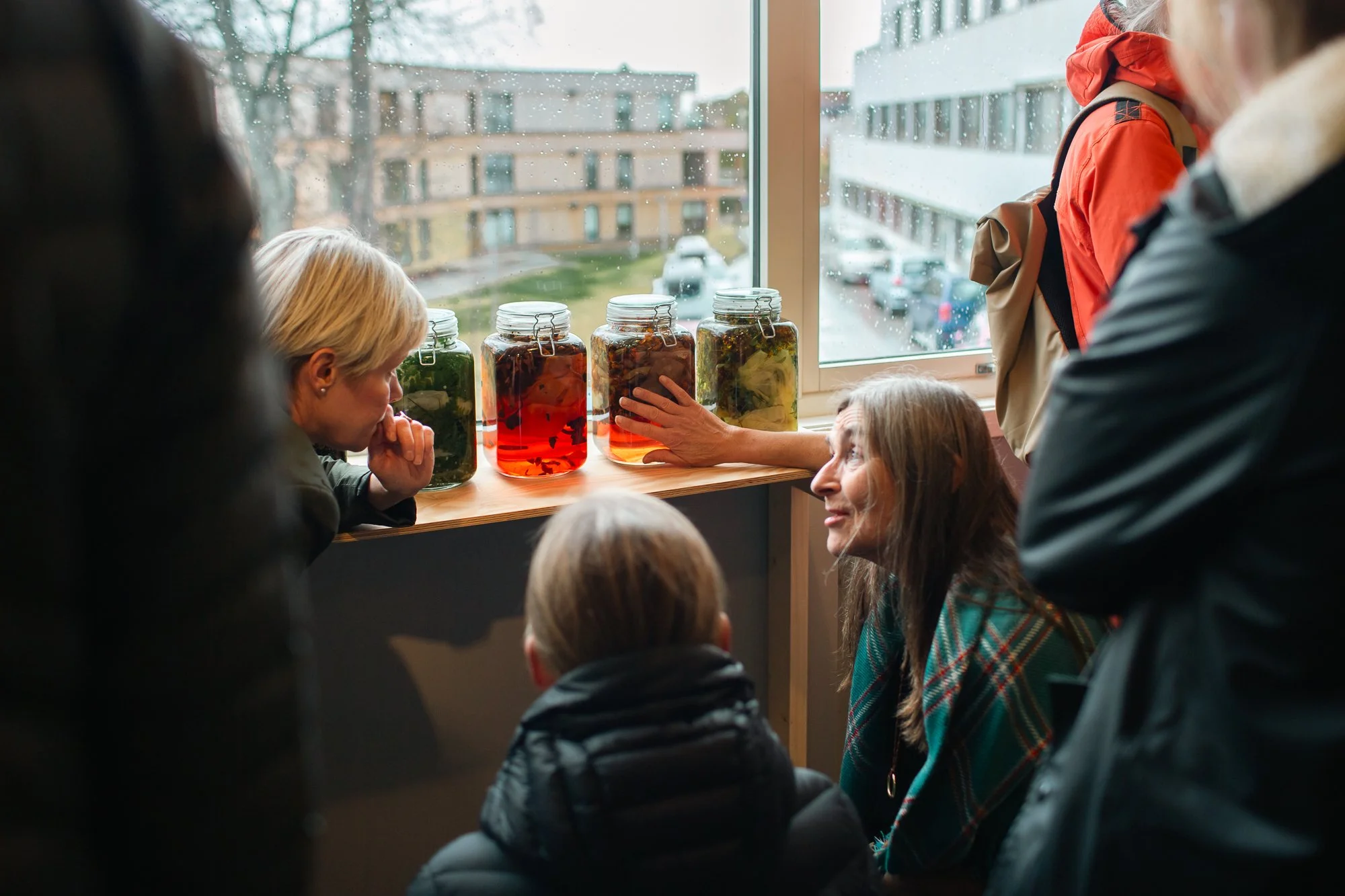
The third (or maybe just alongside the second) step is Hilde Hauan Johnsen’s proposal for a garden of plants that can be used for food, medicine and plant dyeing. In the exhibition she shows one of her textile works entitled Colour Prisms from Nature VV, this one with silk and wool fabrics dyed with plants that the reindeer like to eat and made during a series of collective workshops that took place through this summer.
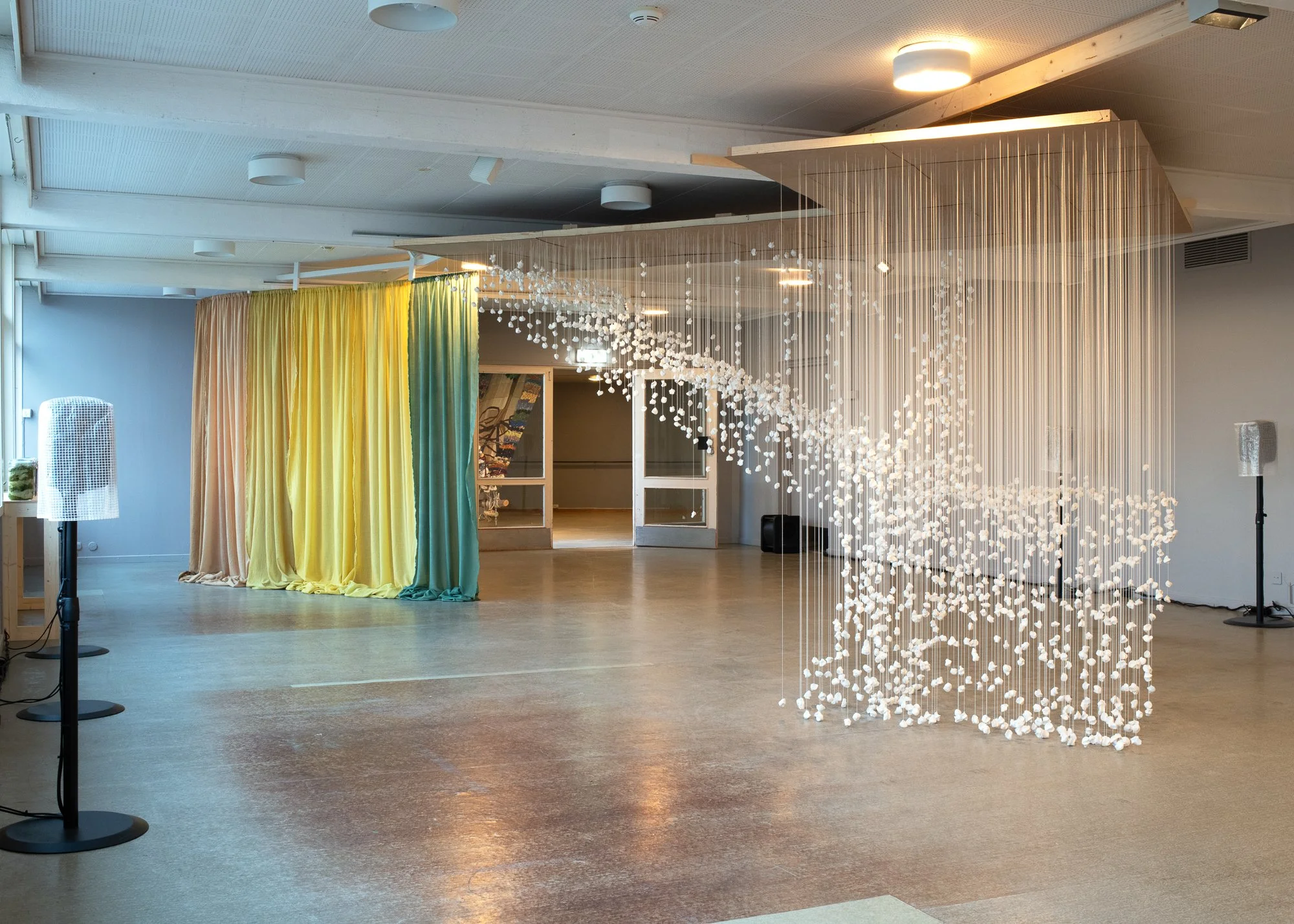
In 2023, just around the time we were moving out of Muségata 2, Alexander Rishaug started making spatial nocturnal sound recordings of the building. He had also heard that Kåre Grundvåg had made these lidar scans of the building as part of the research for the kittiwake project, and wanted to collaborate.
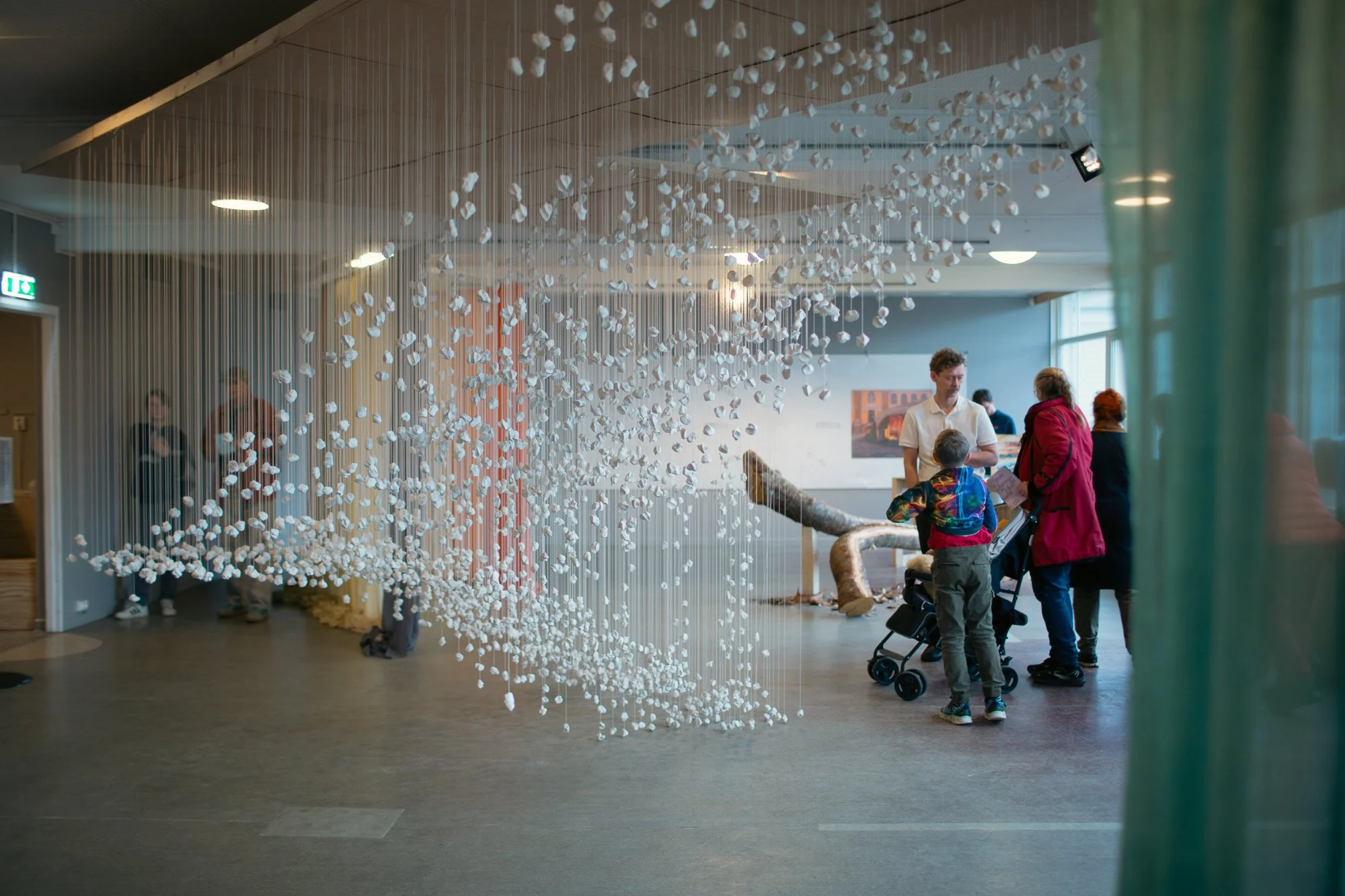
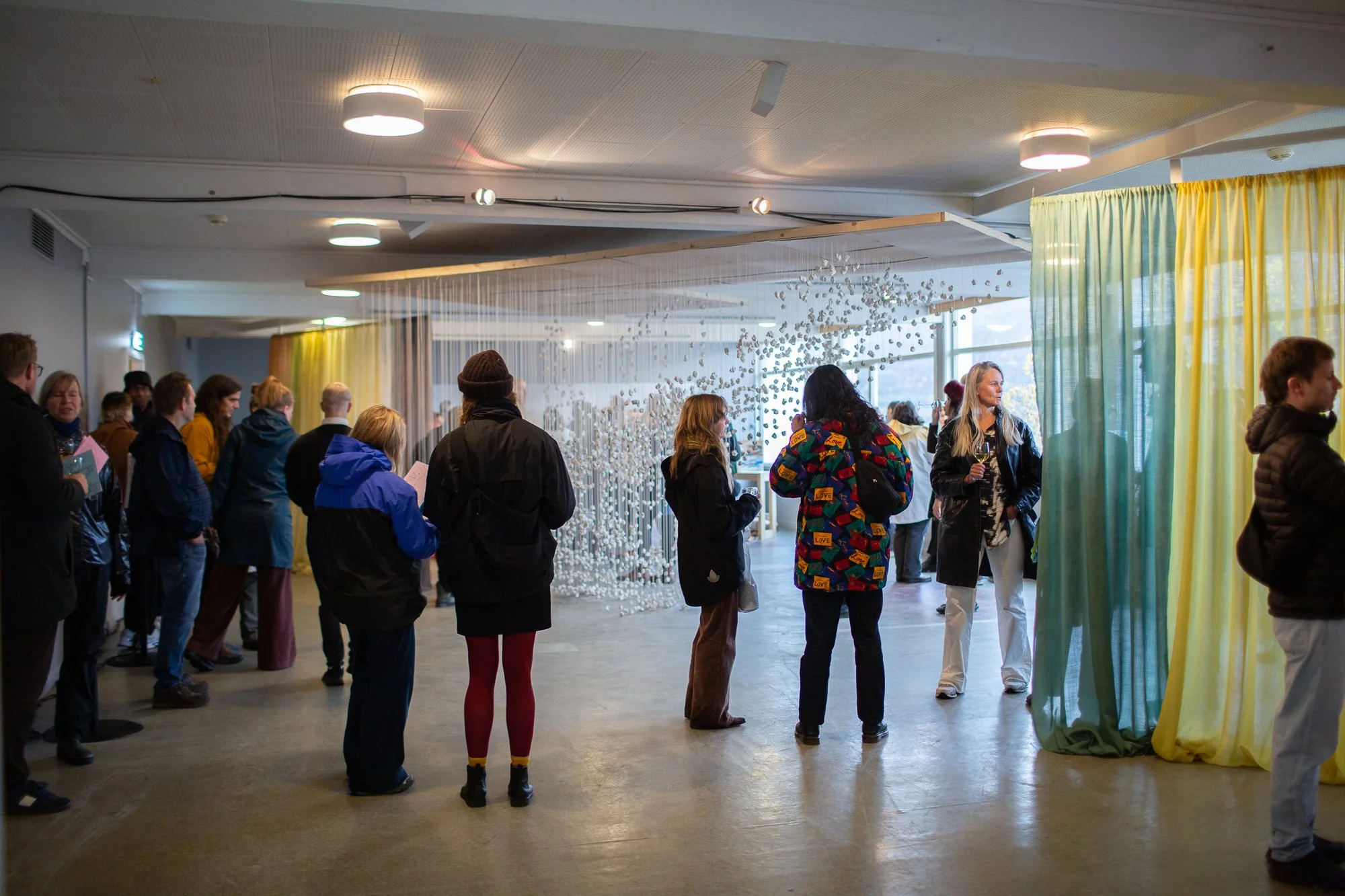
Alexander’s sound envelops Kåre’s 1:1 partial reconstruction of the central staircase of the neoclassical building, rendered as an analogue point-cloud of 2500 strings and clay balls. They’ve created a ghostly presence of Muségata here at Hvilhaug, placing us in a moment of transition and transformation.
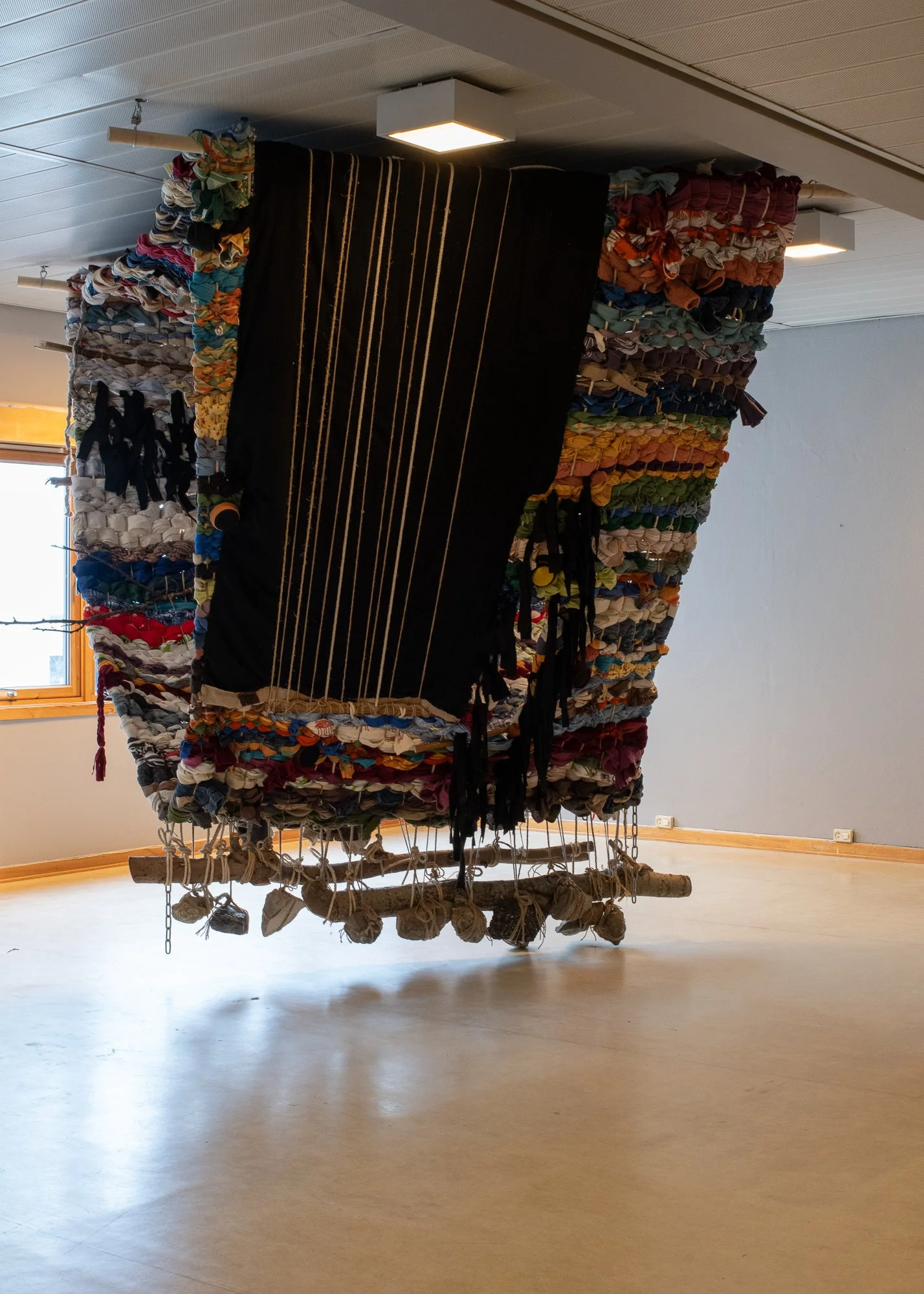
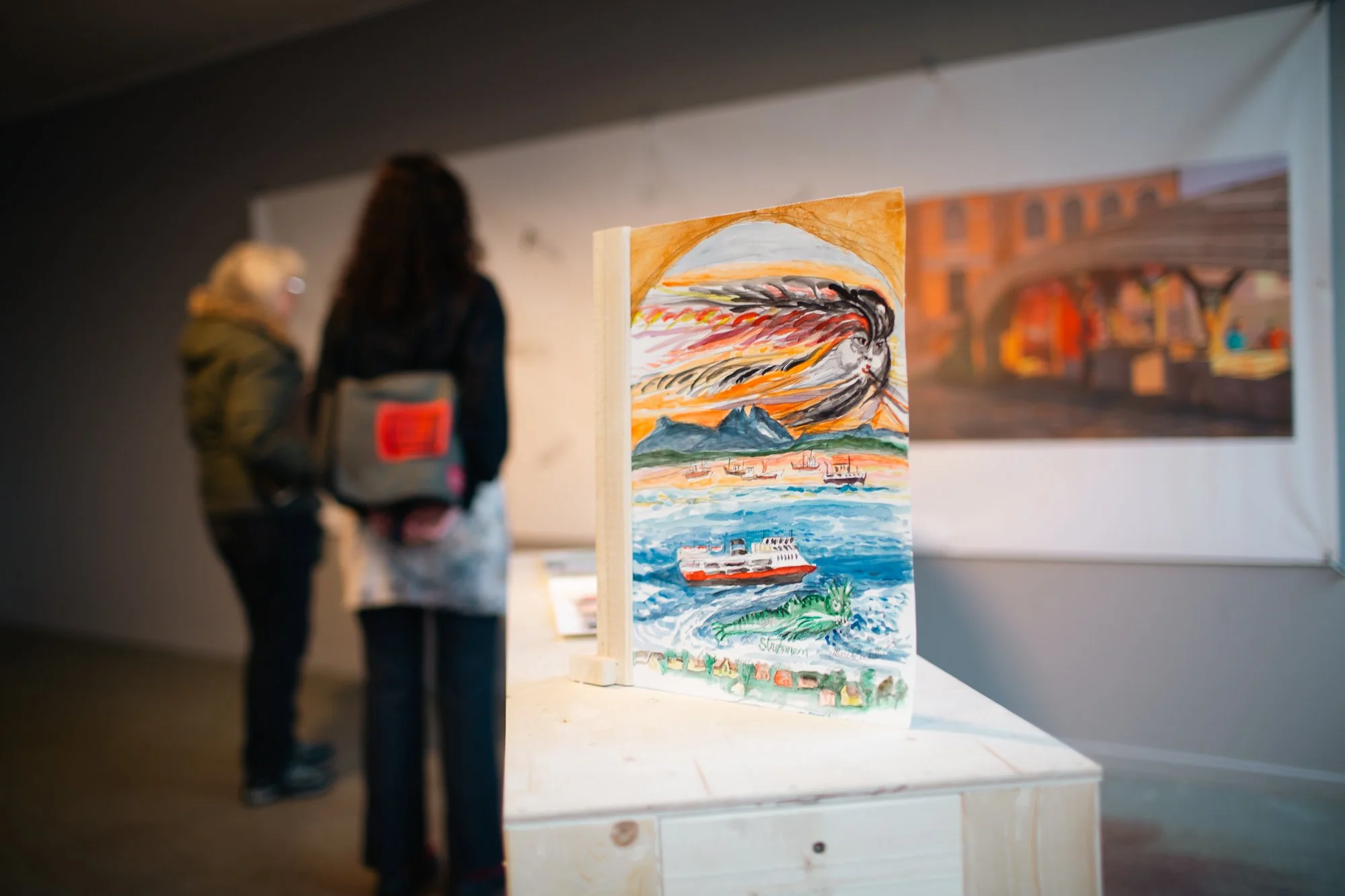
The last work is the newest collaboration and came out of our search for a name for TKF in Kven language. We had a suggestion for one already, and contacted Maija Liisa Björklund who we know as an artist with a strong interest and knowledge of nordic languages, and who had taken part in establishing Kväänitaitheiliijat (the Kven Artists’ Union) in 2021. We received a long e-mail back reflecting on different possibilities, and decided to propose that she could develop a work for the exhibition that would help the process. She wanted to include Liv Bangsund and Inger Emilie Solheim, and the three of them have made a huge rag rug shaped like a triangle called Siirtymäraanu / Moving Blanket, as an exploration of translation as a transformative and restorative act. They have also led a public process of giving TKF a kven name, including an online poll and conversational events. Turning 100 years old, it was about time, or overtime, as Maija Liisa put it in her text for the anniversary book.
SC: What are your reflections on this exhibition: do you see it as a potential starting point for something new?
CF&RA: Definitely. All the works are future proposing and questioning. The works encourage us to stop and listen, to see ourselves as part of a larger community, including a larger whole than just human society. They can be seen as quests for people to take history into their own hands, to treat history like the dream of what could be.
SC: Last but not least, how do you envision TKF in the coming years?
CF&RA: TKF will continue to be a platform where multiple voices, languages, and artistic practices coexist. The institution aims to nurture northern aesthetic practices and traditions while remaining open to experimentation, collaboration, and intercultural dialogue. To be an inclusive, community-focused institution that values northern perspectives, placing local practices at the centre and reaching for global connections through that. Its future lies in sustaining community engagement, supporting artists, and evolving as a vital cultural hub for Tromsø. And moving back to Muségata 2, of course.