May Contain Breastmilk
Review of the exhibition Milk: soso brafield, Kurant, 2—26.10.2025, Tromsø
Ice creams, panna cotta made of formula and healing teas for the uterine lining; motherhood, breastmilk and the politics of feeding are explored in soso brafield's disembodied exhibition.
Text by Ruth A. Aitken
In the staff room at lunch a few weeks ago, we were discussing who had tasted breastmilk. Amongst my colleagues about half had, and spent time describing the taste—nutty, someone said, and extraordinarily, unexpectedly sweet. Nothing like cow's milk.
I was not one of those who could draw on their experiences. I had a son 18 months ago, and while I breastfeed still, it would feel like an act of self-cannibalism to taste my own milk, and an act of theft from him. I am exceptionally curious but can’t quite bring myself to consume something I produced. And, I suspect that my son would know if there was any misuse of his milk—either by me or anyone else. That same evening, I went to the opening of soso brafield’s exhibition Milk at Kurant, with my son in tow.
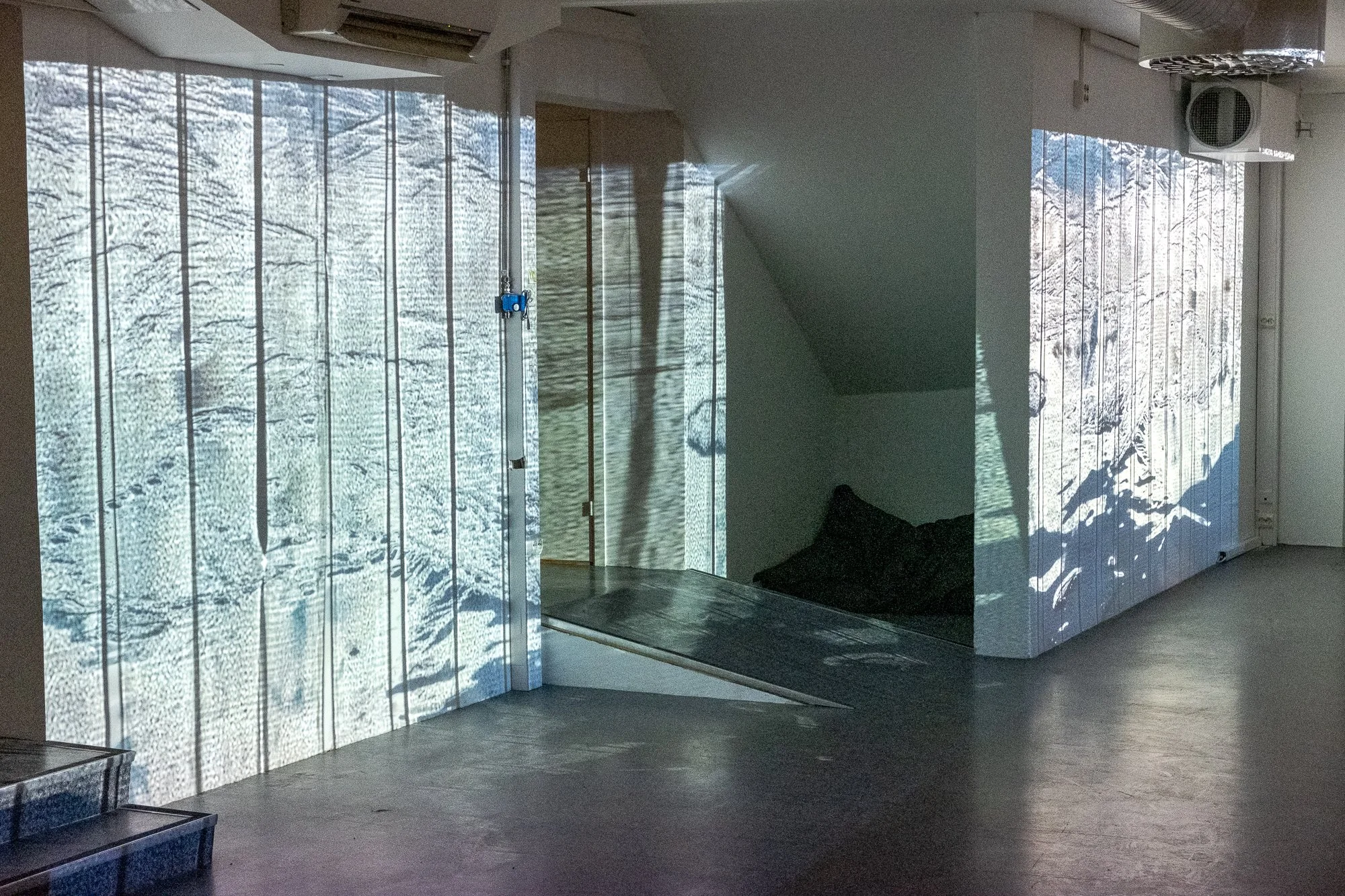
The Milk of the title refers to baby milk, either breast or formula, and to the invisible politics involved in feeding an infant. Curated by Espen Johansen as part of his ongoing ph.d-degree in curating, Milk opens with a large-scale video installation occupying the majority of the main gallery. Video footage of frothy and milky waves was projected through a vast curtain of hanging PVC sheets. They were reminiscent of those you would find in industrial warehouses, refrigerators, food processing plants and, yes, dairies. The refraction of the image through the thick plastic distorted it slightly and gave it an even milkier appearance on the wall.
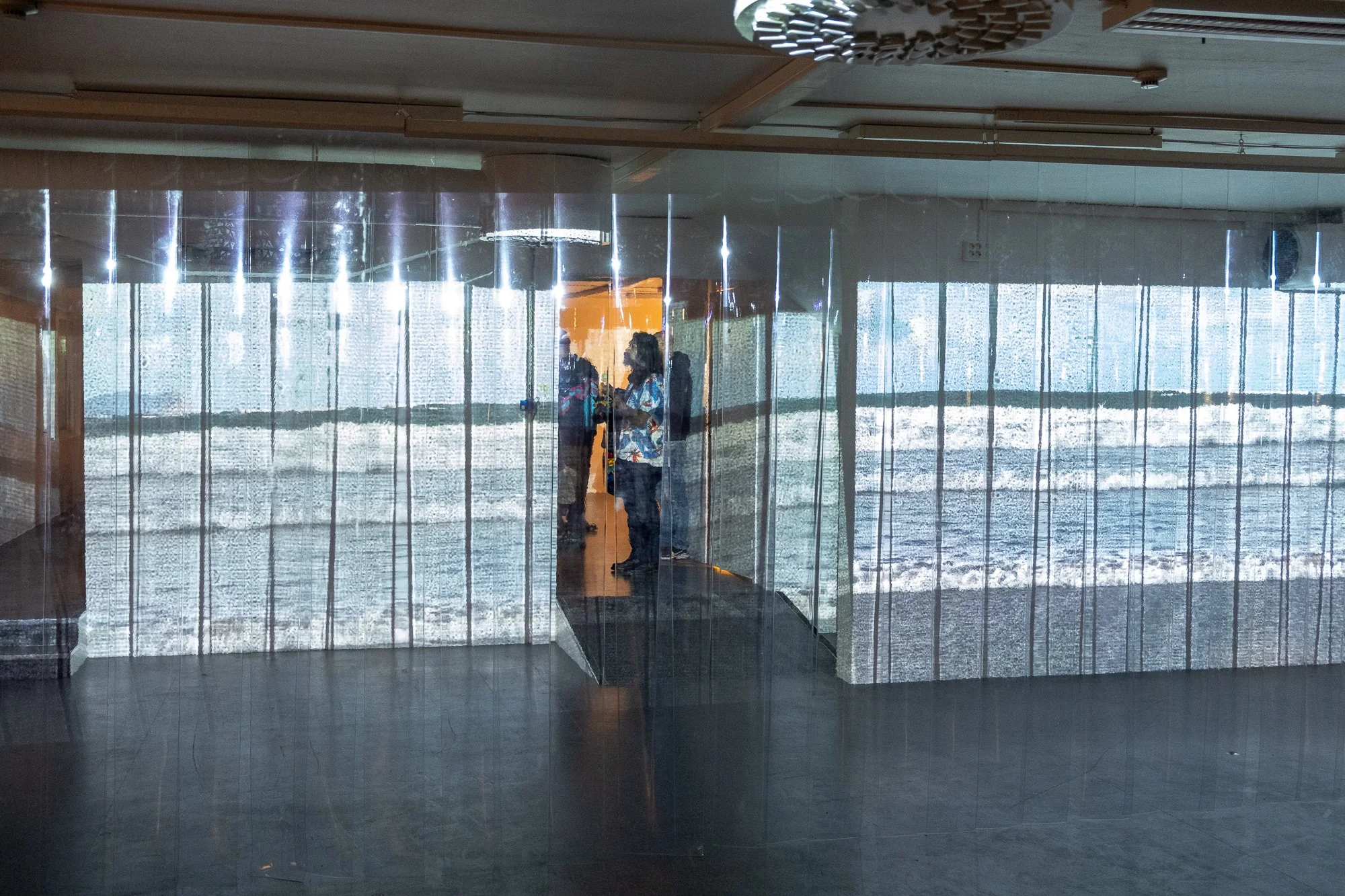
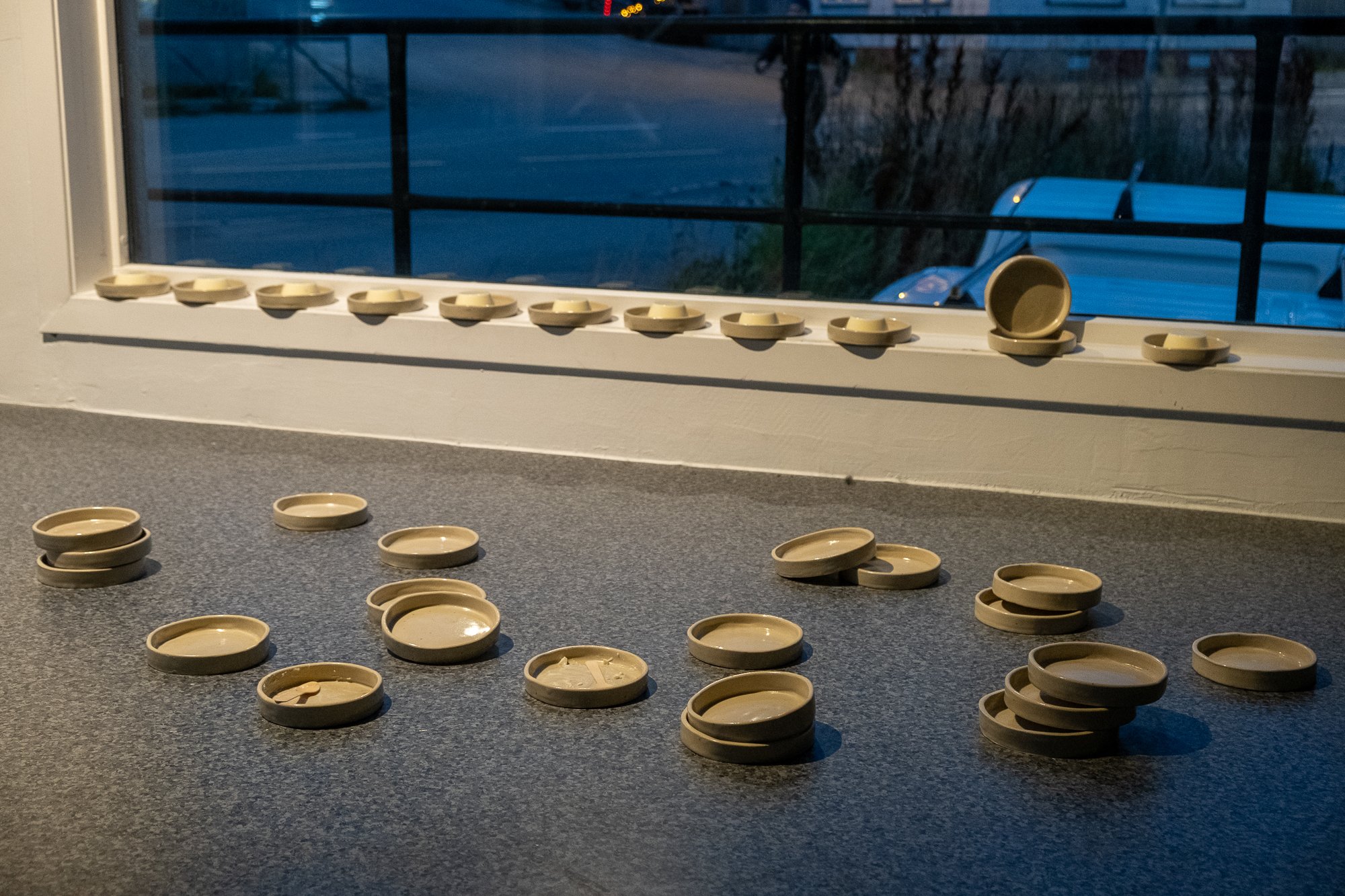
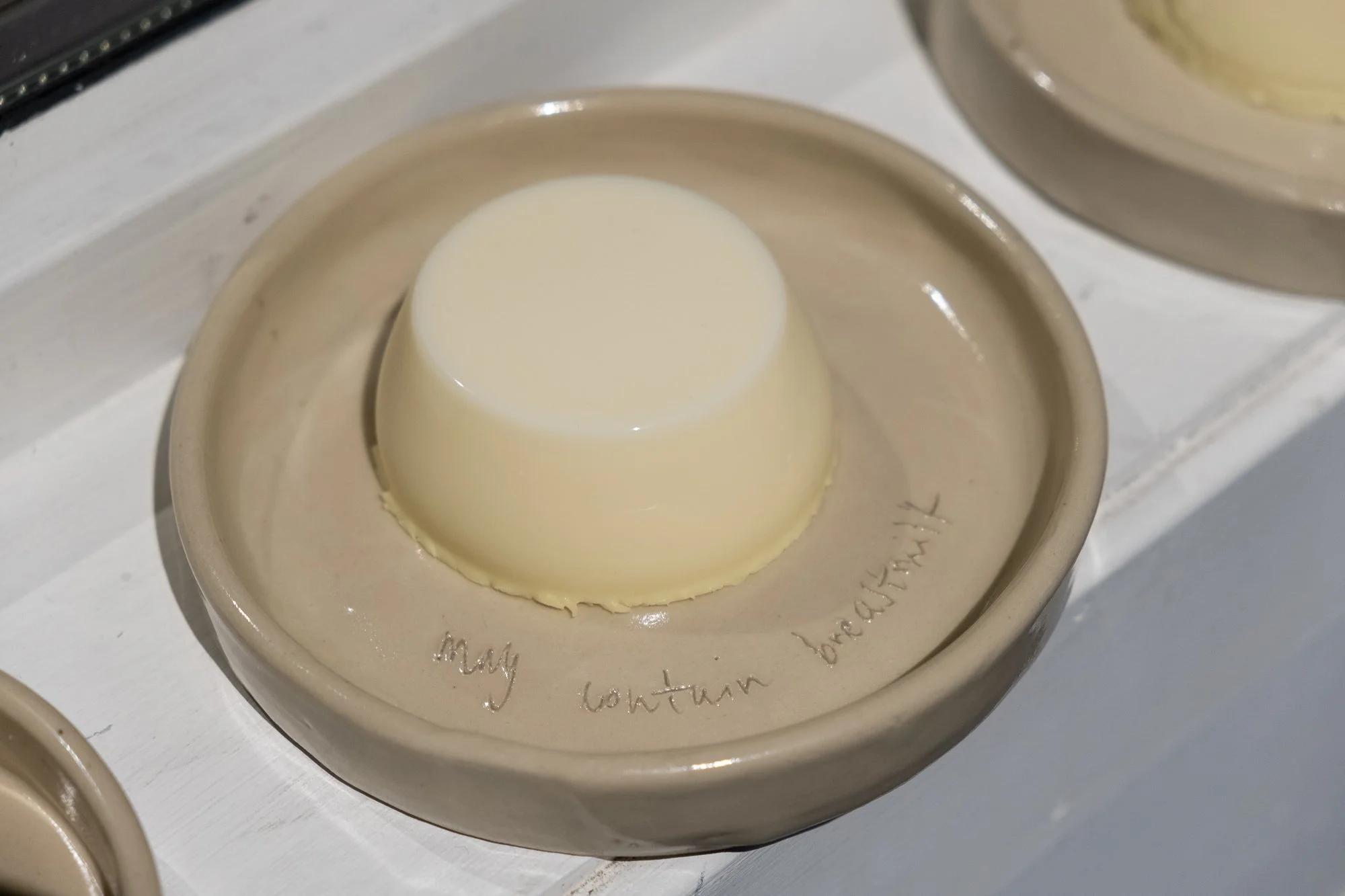
In the same room, we heard a three channel sound piece of brafield breathing out a shooooosh, slow and drawn out, emulating the white noise that fetuses experience in the womb. It is a familiar sound, mimicked by parents the world over to calm fussy babies. The final element in the large first gallery were some small hand-made ceramic plates in the corner of the room, inscribed with the message, ‘may contain breastmilk’.
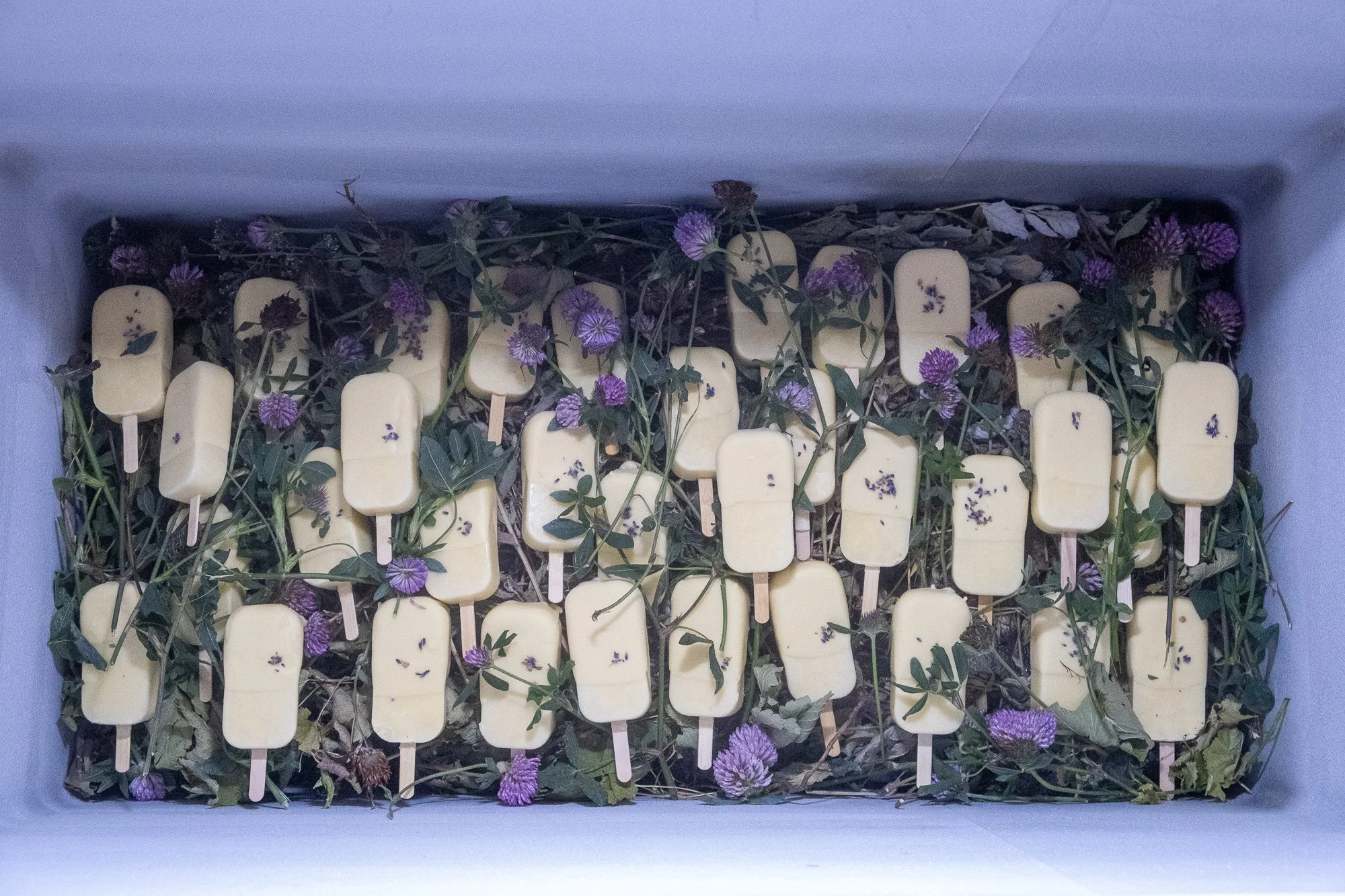
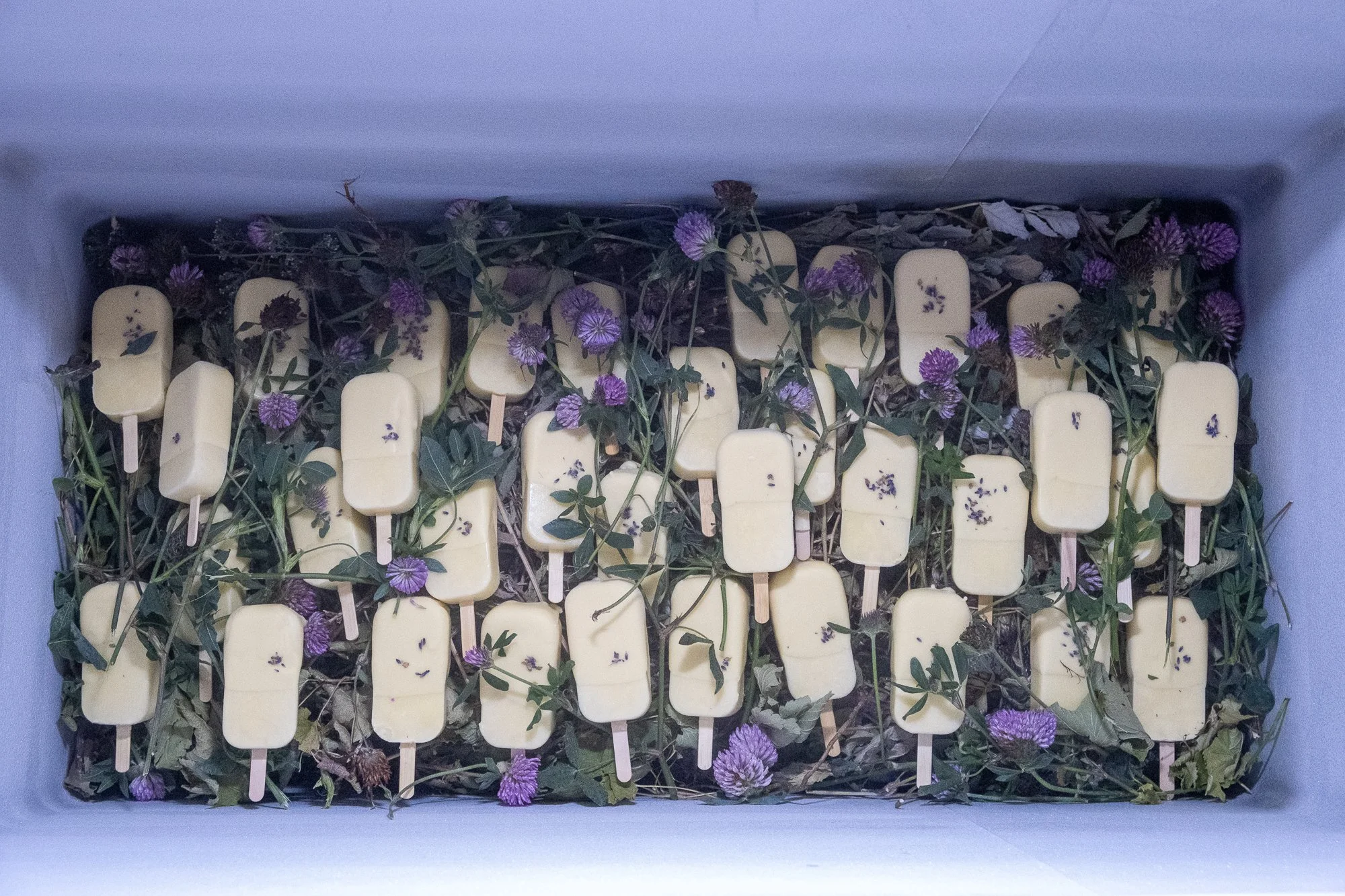
As we progressed into the back of Kurant’s space, we were met with a chest freezer. Opening it revealed a beautiful, chilly presentation of ice cream bars, creamy white and laid out on a bed of medicinal herbs and plants. The ice creams were made with baby formula, and dipped in white chocolate. Surprisingly delicious, but also unmanageably sweet, and when I couldn’t manage to eat the entire thing, it brought me back to this earlier conversation; the unbelievable sweetness of breastmilk. During the opening, we were also welcome to eat Back to Work Panna Cotta, made from baby-formula and served on the ceramic plates.
Behind a small wall (a remnant from Kurant’s venue as a former bathroom showroom), was a little circle of stylish wooden chairs, tightly formed into a geometric, circular formation, allegedly made for the Lillehammer Olympics in 1994, though I have not managed to work out the relevance beyond it being an interesting little curiosity. During the course of the exhibition, this Reading Circle was animated as part of three events led by Johansen, and, on opening night and during regular opening hours, created a nice little pause to be able to sit, eat, reflect and chat with other visitors.
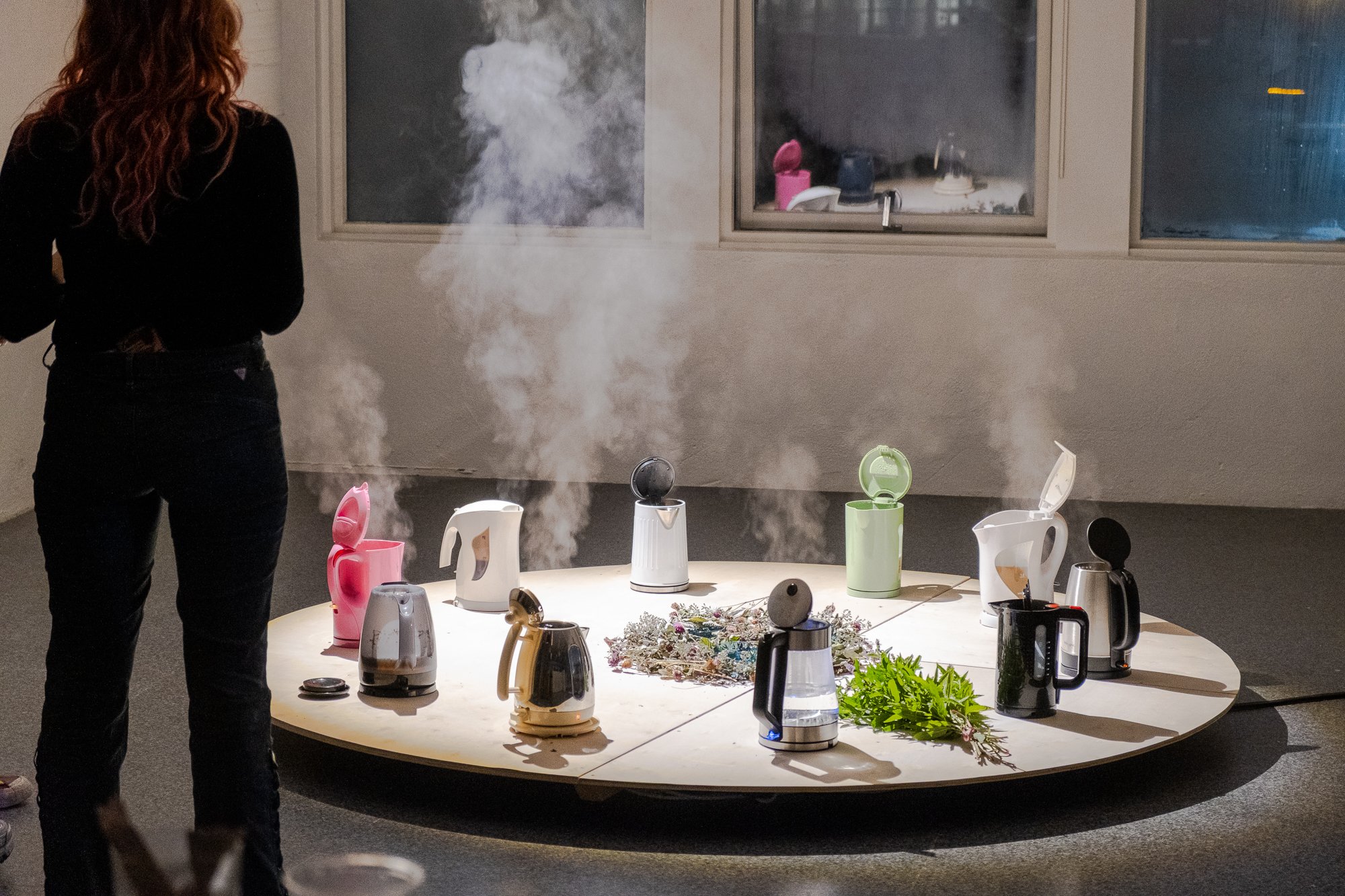
At the very back of the gallery was a large circle of 10 kettles collectively boiling every hour and letting out steam into the gallery, making it humid and giving it a strong smell of herbs. At the centre of the circle was a nest of medicinal herbs, including raspberry leaves, an often used plant for healing the uterine lining after birth (while simultaneously being dangerous for anyone who is pregnant). The sound of the kettles boiling brings me back to the white noise in the entrance, the sound inside the womb, while the title Kettling Orchestra references the antagonistic policing strategy to control crowds during demonstrations and protests—and the voices of those loudly and temporarily coming together. Tea drinking as a social act becomes restorative as people come together to heal, countering the aggression of the kettling, where people are forced into tight confinement together.
However, Kettling Orchestra has a warmth—both literal and metaphorical—that is absent from the rest of the exhibition. No bodies exist in the works, though there are references, from the soft wobbles of the panna cotta, to the ‘may contain breastmilk’, the healing herbs and the sound of brafield’s breath. But it is interesting, whether intentional or not, how bodiless an exhibition exploring baby breastfeeding this was—the eponymous milk feels dislocated from the bodies that give rise to it. The pamphlet that accompanies the exhibition goes into much more detail, and points a little to this dislocation; the difficulties of breastfeeding and the politics of formula, the invisible labour involved and its economic impact, the class dynamics of wet-nursing–a practice of the upper classes hiring women to nurse their children, the impacts of war on the access to nutrition needed to breastfeed and access to formula and clean water. An interview between Johansen and brafield also mentions the role communities have in childrearing and parental support—the old adage “it takes a village” seems palpably true, as it has become more and more difficult to follow in contemporary, dislocated urban societies. To live through those values requires deliberate action, something brafield’s previous social and relational practice has intentionally engaged, often actively reaching out to, and creating, communities. I would have liked to see more of the ‘it takes a village’ in the exhibition, not visible here other than the reading groups led by Johansen.
The pamphlet however is very much written from the perspective of motherhood, including diary inserts from Inger Fure Grøtting and the interview between brafield and Johansen. But the exhibition doesn’t; it is bodiless, motherless, fighting to be heard in an enormous, cold space. Perhaps this is a deliberate attempt to fight the notion that an exhibition about breastmilk would be warm, cosy and embodied, connecting it instead to the vast challenges of parenthood, baby feeding and the industrial food economy that it (imperceptibly) is a part of. But this gives the exhibition a particular sterility—it lacks an emotional connection and an intimacy which ultimately feels contradictory to the thematics it wants to take up. There were so many strands that were picked up that I am still trying to unravel them—and it feels like it may be the same for brafield, understandably in a topic that has such deep personal, social, cultural and political entanglements. As much as I loved specific elements, Milk feels like it is in its infancy as an aesthetic exploration.