A quiet show of loud hope
Review of the exhibition Jannik Abel: Folkeskikk. Fem folkebevegelser – én kamp (Good Manners. Five Popular Movements – A fight) at Nordnorsk Kunstmuseum), 04.06.26 – 25.10.26, Tromsø
In today's climate of demoralisation and polarisation, Jannik Abel’s photos of protesters create a strong visual narrative centered on hands that protest, hands that care, and people who refuse to let go of the hope for a more just world.
Text by Marion Bouvier
The name Jannik Abel may evoke images of wooden sculptures and forest goddesses for those who have seen the artist’s previous exhibitions. But Abel’s show at Nordnorsk Kunstmuseum leaves the forest behind to embrace people protesting injustice in its many forms. Folkeskikk / Good manners documents five movements that have in common the fight for equality and environmental justice: the 2022 spontaneous demonstration in the wake of the terror attack against a gay bar right before Oslo Pride; Sámi-led protests in Repparfjord and Fosen; environmental activists; pro-Palestinian demonstrations; and the anti-fascist demonstration after the racist murder of Tamima Nibras Juhar.
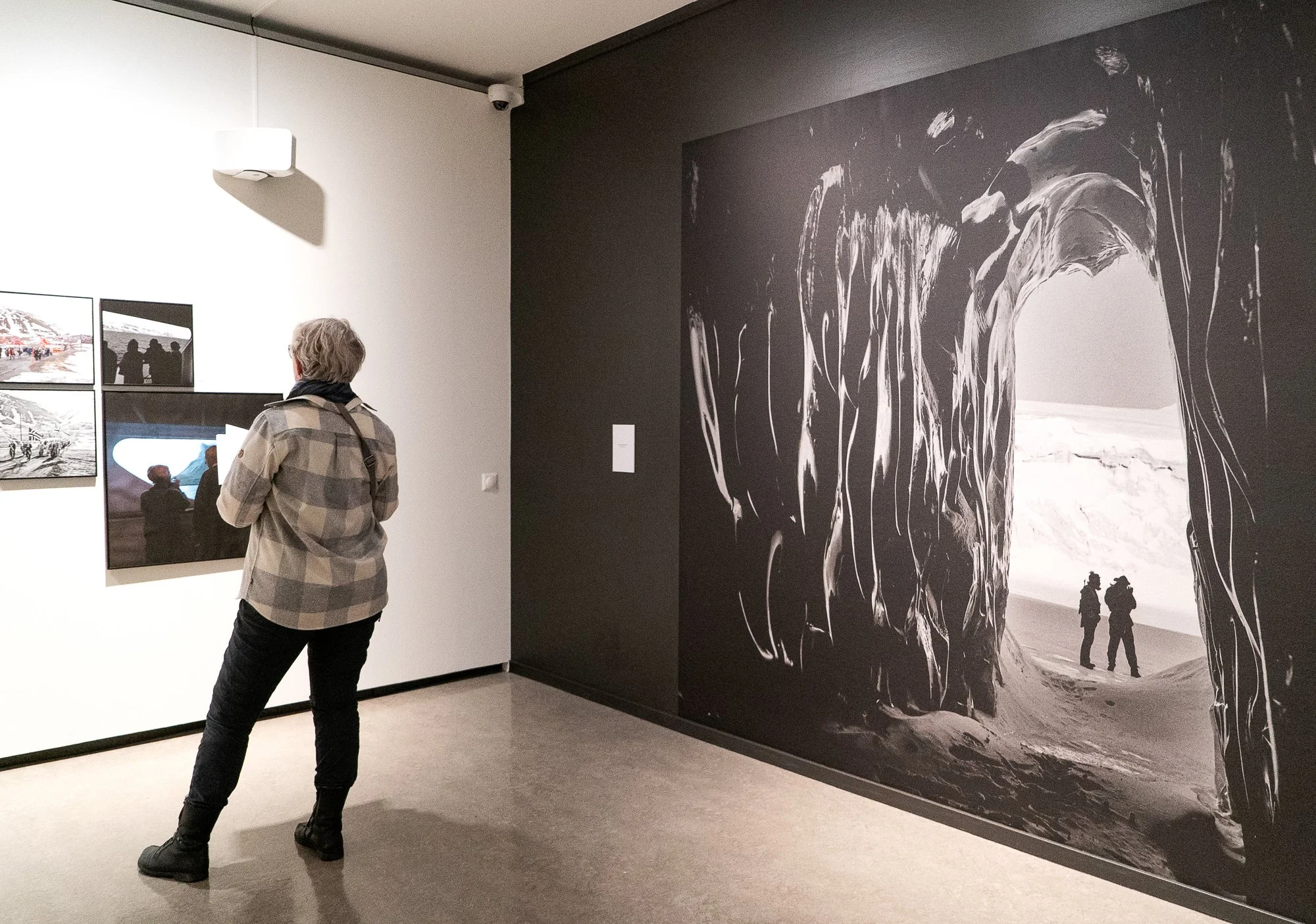
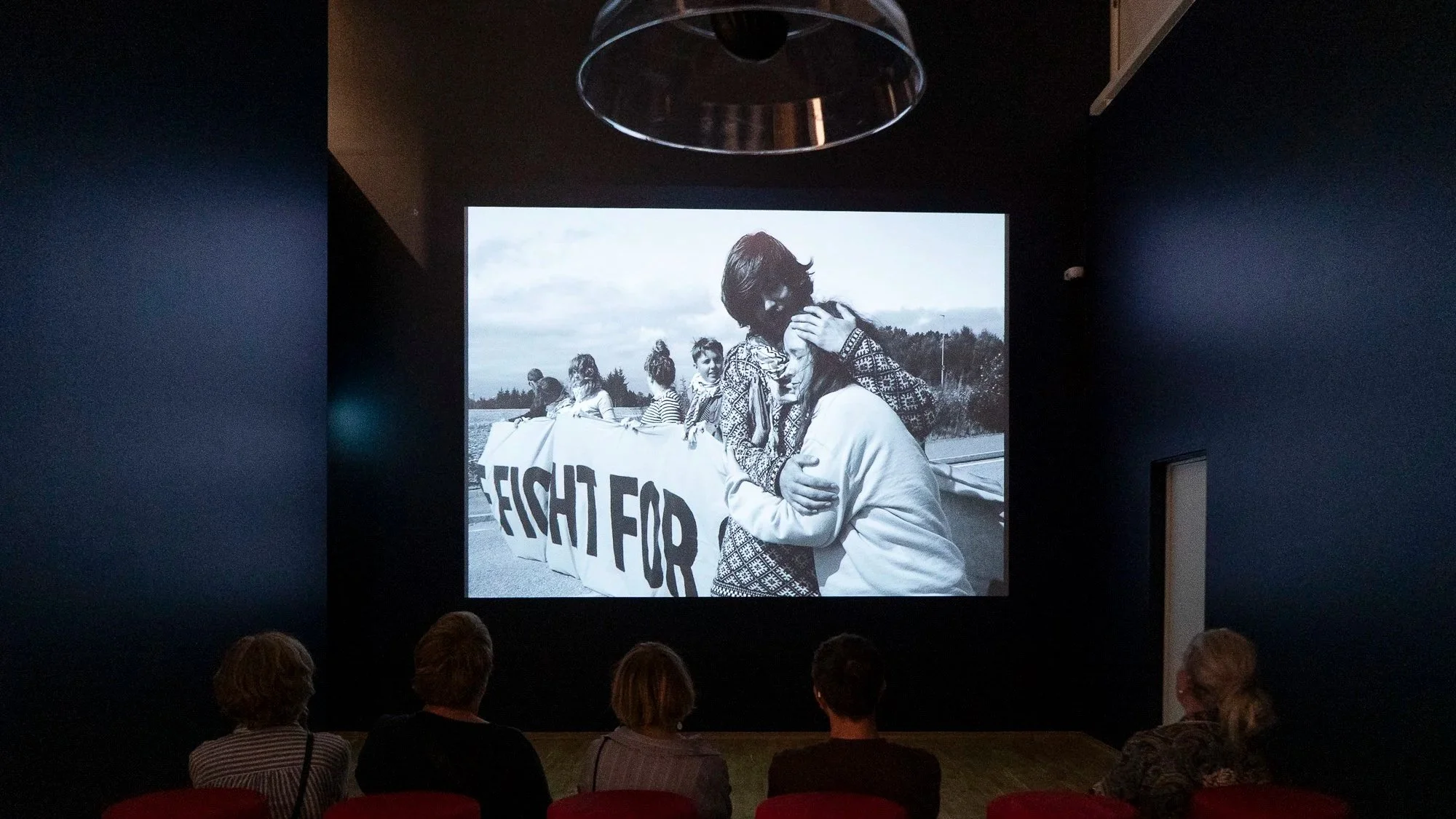
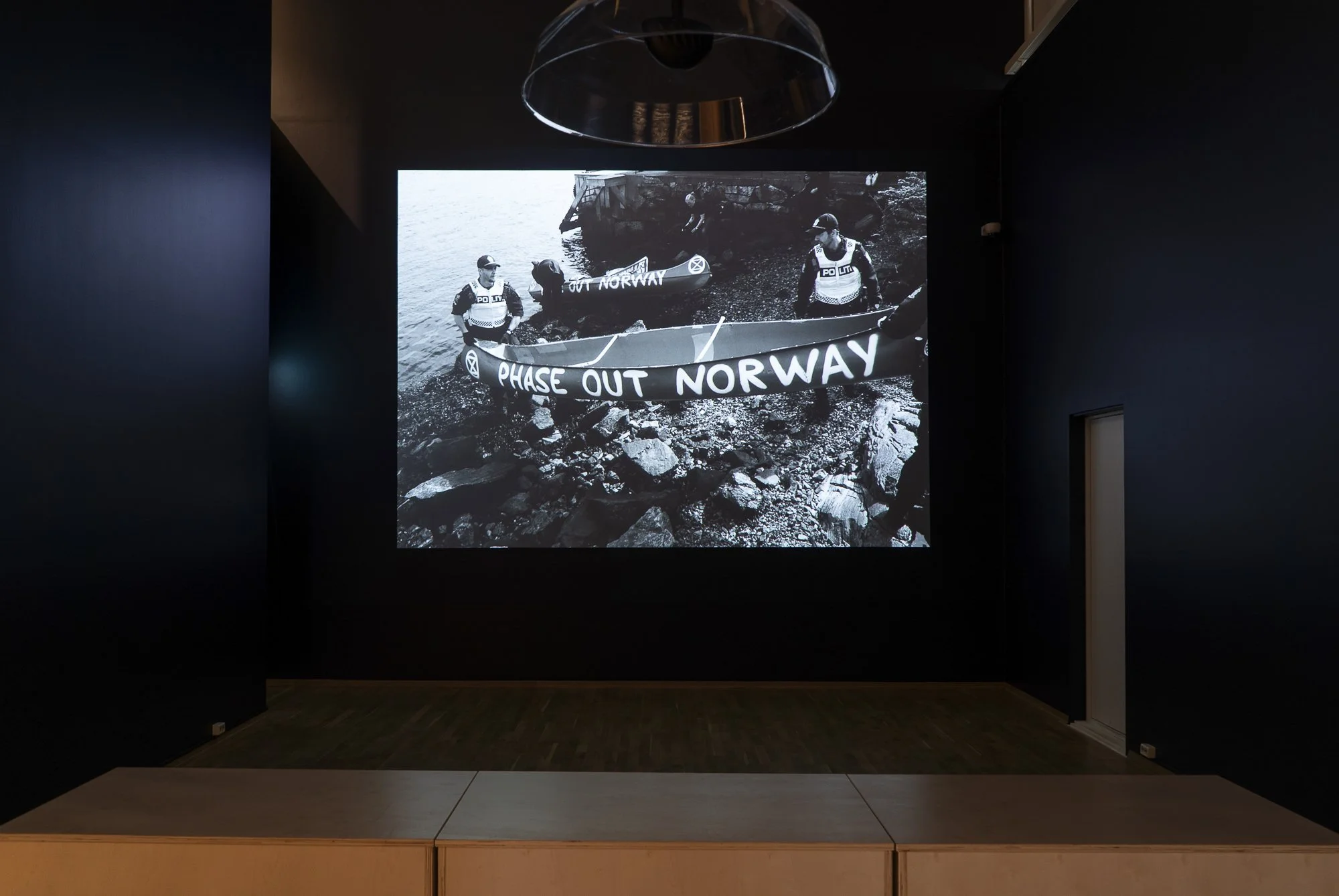
Visually, the exhibition adopts a deliberately minimalist layout that spotlights the vivid emotions displayed in the photographs. The exhibition occupies one room only, up one set of stairs from the entrance of the Nordnorsk Kunstmuseum. The room is plunged in darkness, and to the left, a staircase-like wooden seating invites the viewer to sit and watch a slideshow of 150 photos, some in colour and some black and white. An almost imperceptible device above the bench adds a sound shower to the experience from where slogans from the demonstrations are softly whispered. At times, nothing is to be heard, until suddenly, a hushed “La elva leve” (let the river live), “Fritt Palestina” (Free Palestine), or “La olja ligge” (Leave the oil in the soil), among others, falls into my ears. By willfully contrasting these quiet utterances with the loudness of demonstrations, the exhibition recenters us on the images and protagonists illuminated throughout the slideshow.
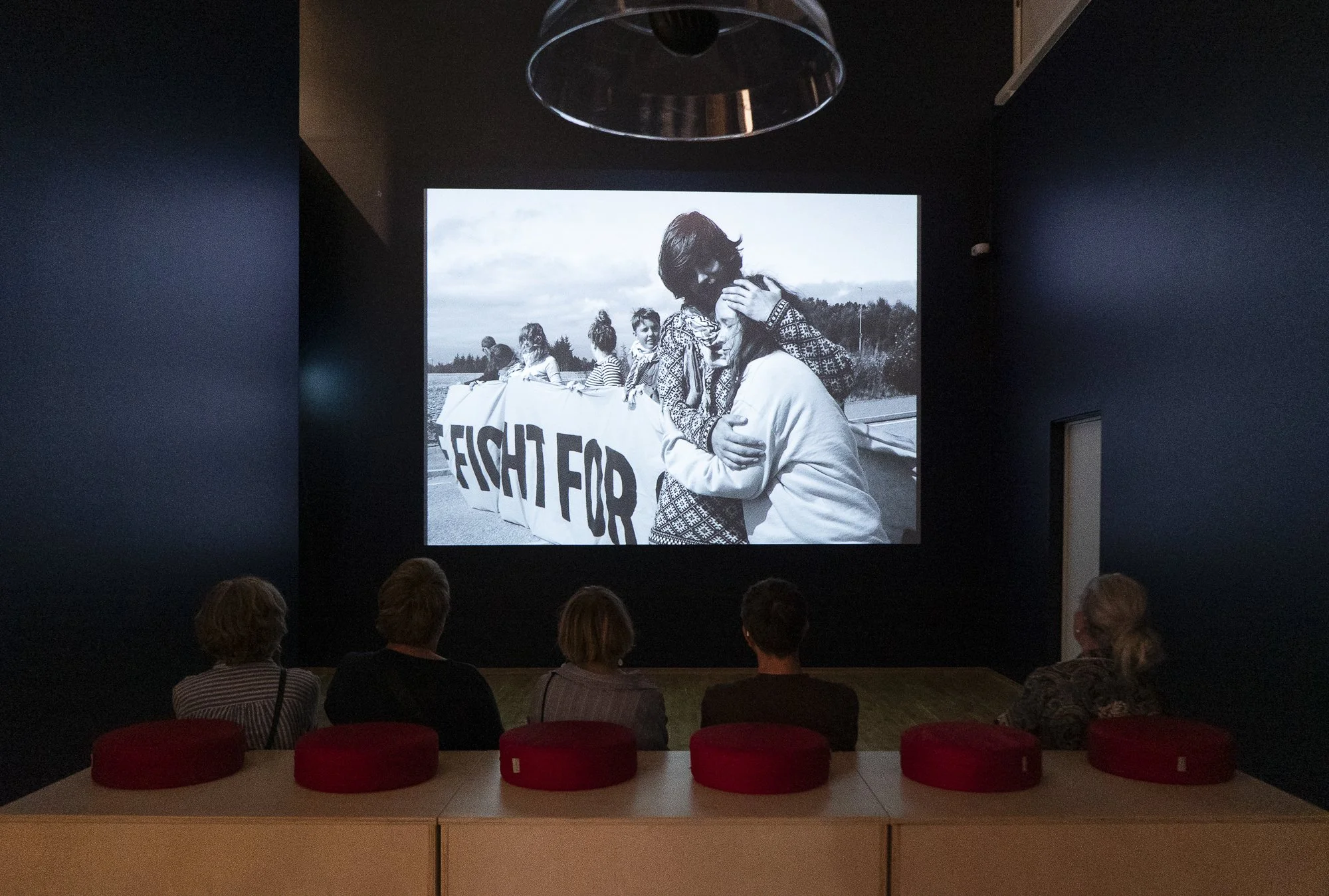
In the photos, the faces and gazes of participants are tense, resigned, hopeful. But their hands stand out more prominently: fingers forming the peace sign, raised fists, flipped middle fingers, hands tightly gripping flags. Those hands, louder than words and slogans, become symbols of all the emotions of the protesters: anger, hope, determination, a desire to change the status quo. Watching these images, I think of the power of human action through the hands that carry out our intentions; hands that hold weapons to kill and brutalize, politicians’ hands that gesticulate and agitate, but also hands that build shelters and hands that bring care to other beings. These hands appear in the photographs too: a hand on someone’s back, tenderly wrapped around someone else’s shoulder. Hands that touch in solidarity and in comfort.
What is our responsibility as human beings? The choice of title for the exhibition, “Folkeskikk”, translated as “Good Manners” in English, points clearly to that question. “Å ha/vise folkeskikk”, to have good manners, and its contrary, “mangel på folkeskikk”, lack of good manners, are usually assigned to relatively banal social mores such as greeting neighbours, holding the door open, showing consideration on public transport. You could summarize it as common courtesy. But like every majority-based definition of proper behavior, it also implicitly upholds the status quo. In this case, attending demonstrations can be criticised as bad manners, following the old idea that a “good Norwegian” should not air conflicts in public and should not disturb public peace. [1]
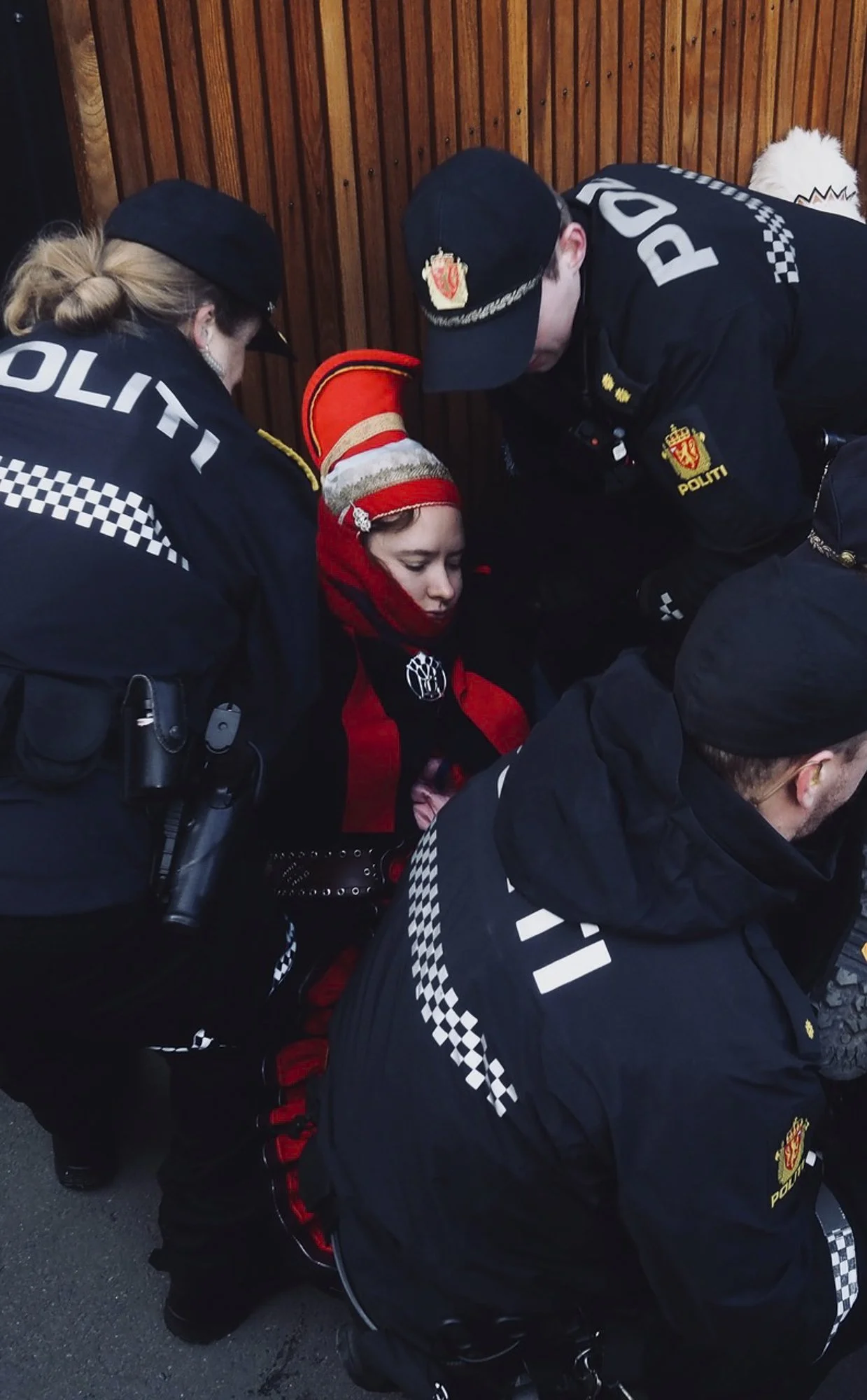
Through their photographs, Abel seems to voice the belief that, on the contrary, it is good manners to rise against all forms of oppression. For if the general peace is built on sexism, racism, homophobia, destruction of the environment, and encroachment upon Indigenous people’s rights and land, is it not a “good Norwegian’s” duty to protest? This is the feeling I am left with when sitting in the dark in front of Abel’s photos, and I find the impact of these silent protests and their ethical implications leave me choked up.
More broadly, the exhibition probes the relationship between art and activism. In this exhibition, Abel clearly takes sides, identifying with the protesters and praising their fight by valorising their images. This choice is also laid out openly in the text printed on the wall of the exhibition room: “It took me a little while to see it, but it eventually became very clear, this is one fight: for freedom and against oppression,” writes Abel.
The Nordnorsk Kunstmuseum also clearly chose to house this celebration of human rights activism, as museum director Stina Högkvist highlighted in her opening speech. She called NNKM a “child of that revolution,” referring to the seizure of the King’s Louvre Palace and its transformation into a public museum in the aftermath of the French Revolution. She further explained that “Activism is in (our) blood here in the North.” In that vein, Abel claims the heritage of artist-activists who used their artistic power to condemn the ills of our world; they also identify solidarity and civil disobedience as important tools to dismantle the master’s house, to use the words of Audrey Lorde. [2]
Footnotes:
1: We see this pattern of condemning social movements historically through the repeated jailings of Hans Nielsen Hauge in the 18th century (using the 1741 konventikkelplakat that banned lay religious gatherings), the imprisonment of labor movement leader Marcus Thrane in the 1850s, and the branding of women’s demonstrations to obtain the right to vote in the 1910s as “unwomanly, ” not to mention the unlawful arrest by the Israeli state of the “flotilla” activists. Interestingly, one of the turning points in civil disobedience came about in 1979-81 during the Alta demonstrations against damming of the river. The mobilisation of Sámi and environmental activists remains one of the emblematic moments of civil disobedience in Norwegian modern history.
2:In a now-famous 1979 speech at the Second Sex Conference in New York, Audrey Lorde said: “"For the master's tools will never dismantle the master's house. They may allow us temporarily to beat him at his own game, but they will never enable us to bring about genuine change." She was in particular criticising mainstream feminist movements for excluding the reality of Black, lesbian, poor and Third World women.