Marsil Andjelov Al-Mahamid: Bridging violent past and a better future through social practices
Interview with Marsil Andjelov Al-Mahamid
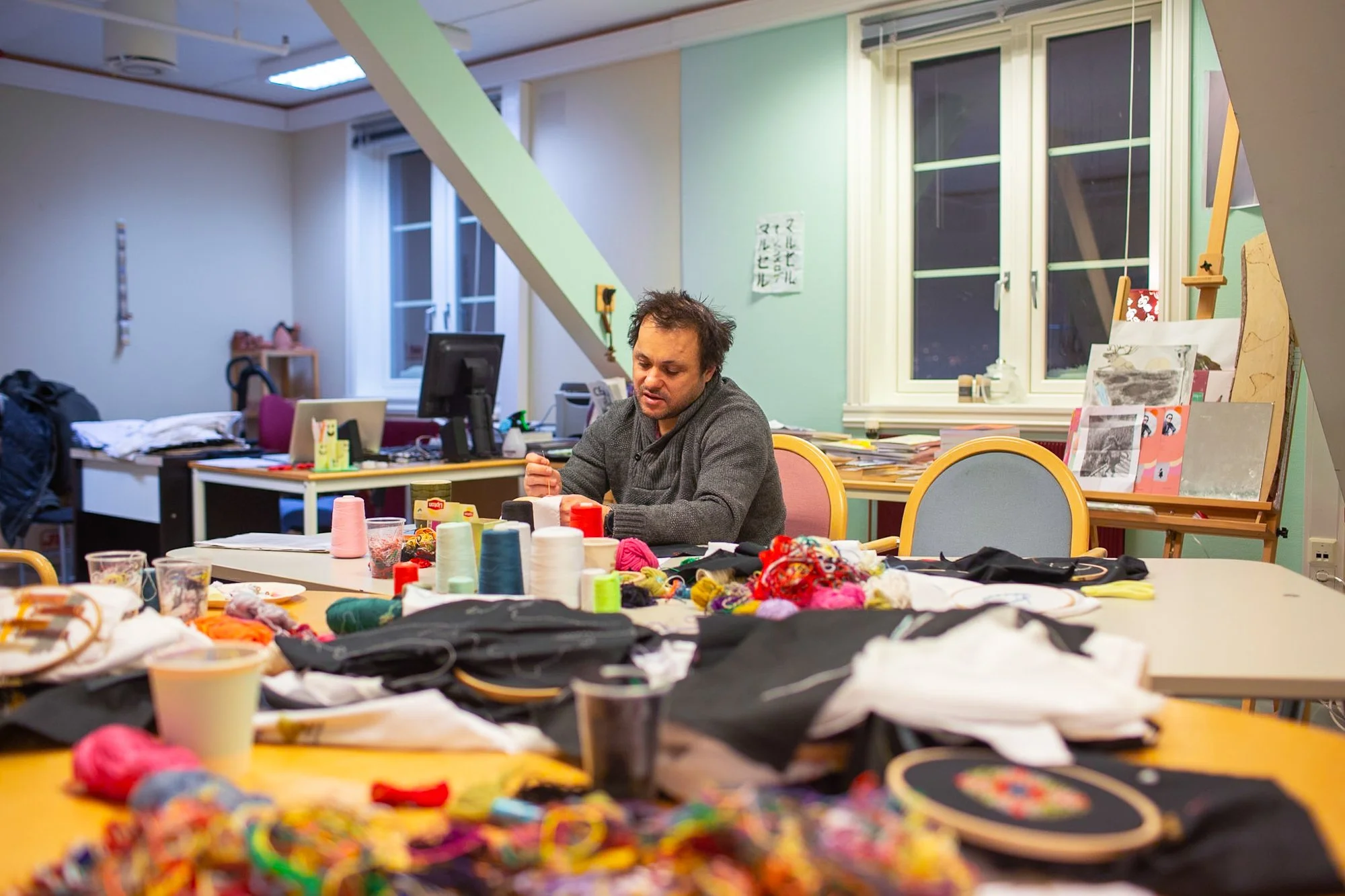
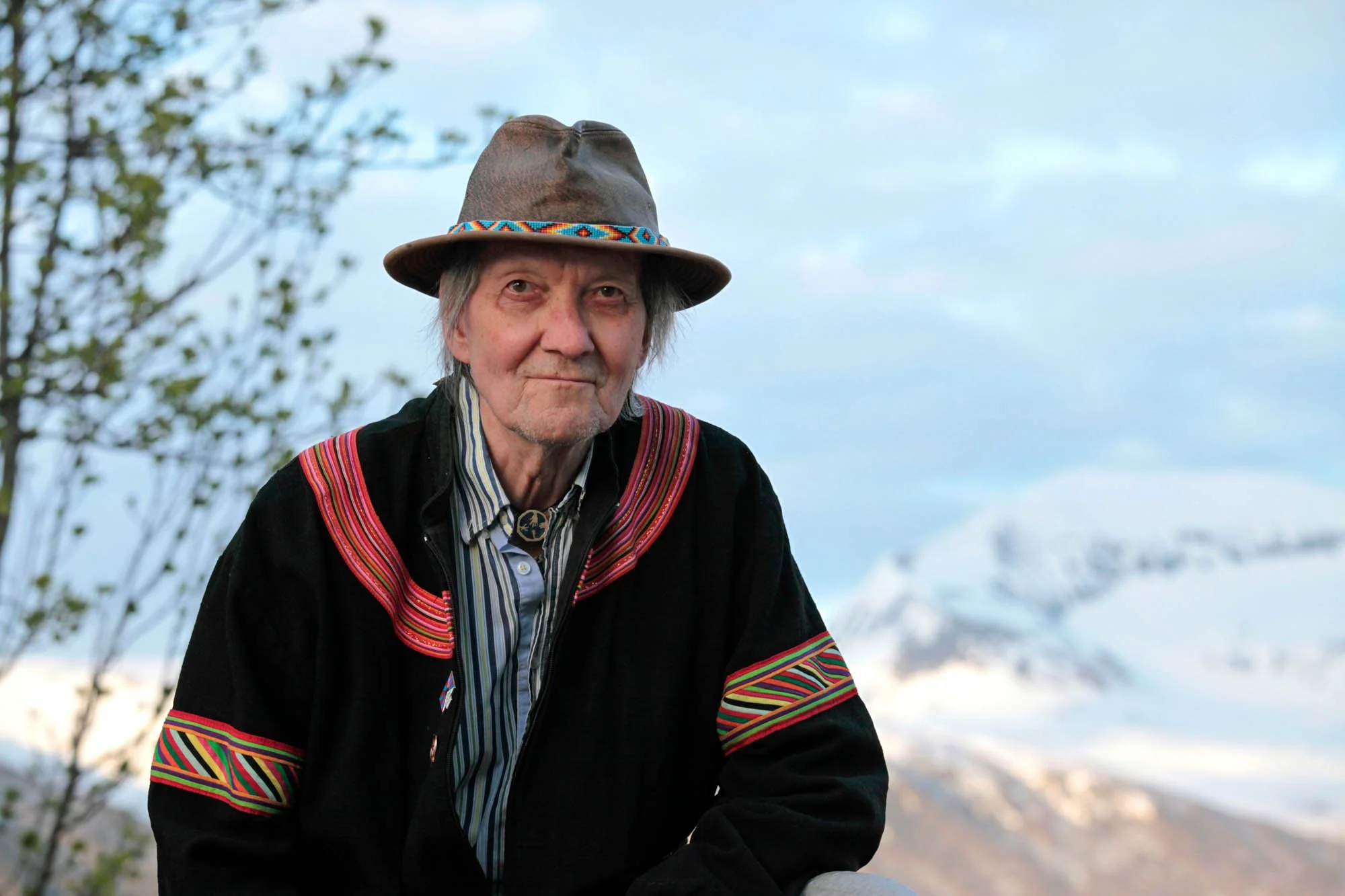
Marsil Andjelov Al-Mahamid is an artist born in Kikinda, Yugoslavia in 1983, from a Syrian father and Serbian mother, based in Tromsø since 2009. Today, his works deal with deep collective wounds, aiming to both raise awareness and promote societal change. Writer Ana Bruno visited Al-Mahamid in his studio in Tromsø and talked to the artist about his artistic practice and how he explores displacement, war and their consequences through both personal experiences and historical research.
Text by Ana Bruno
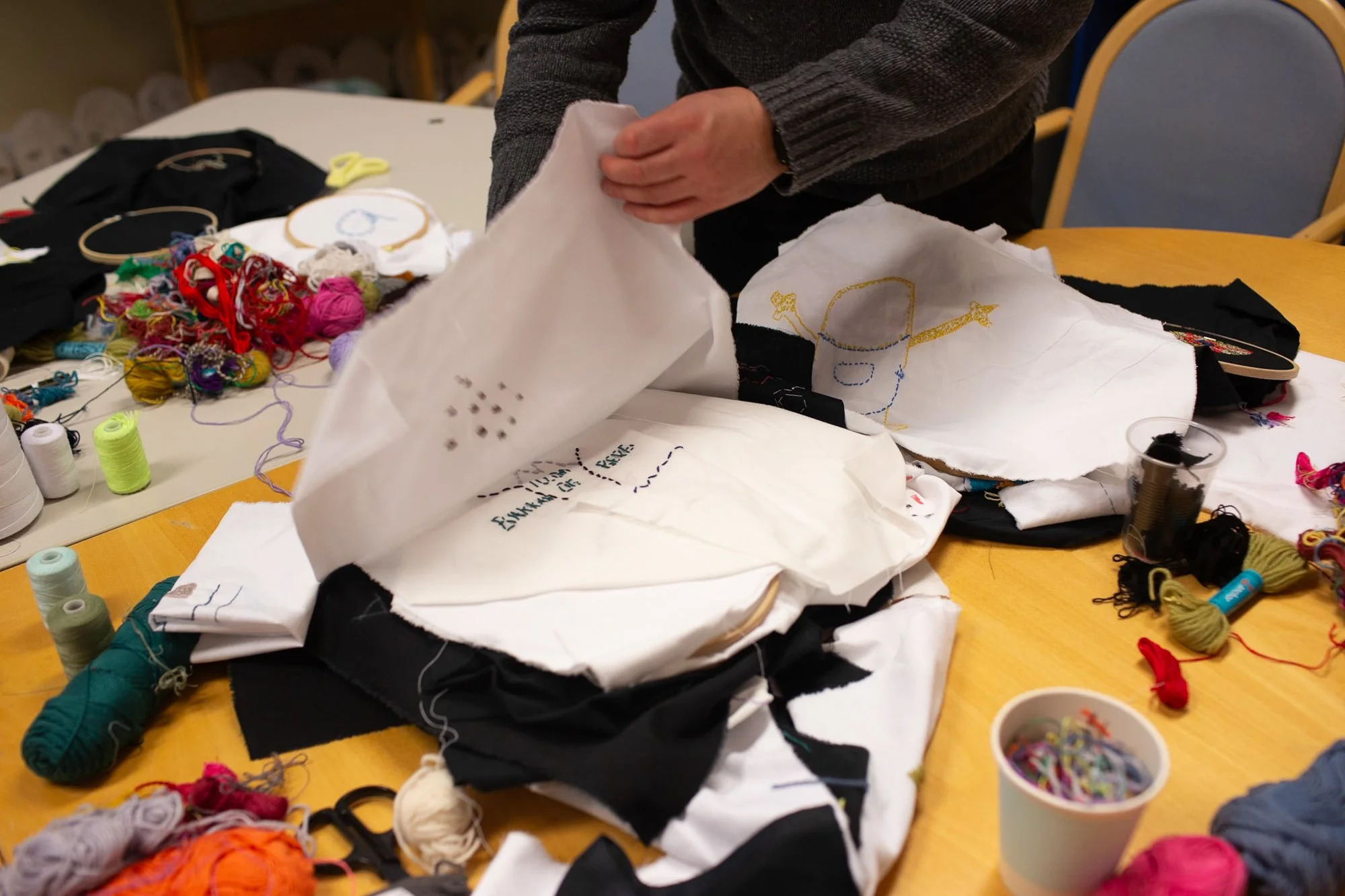
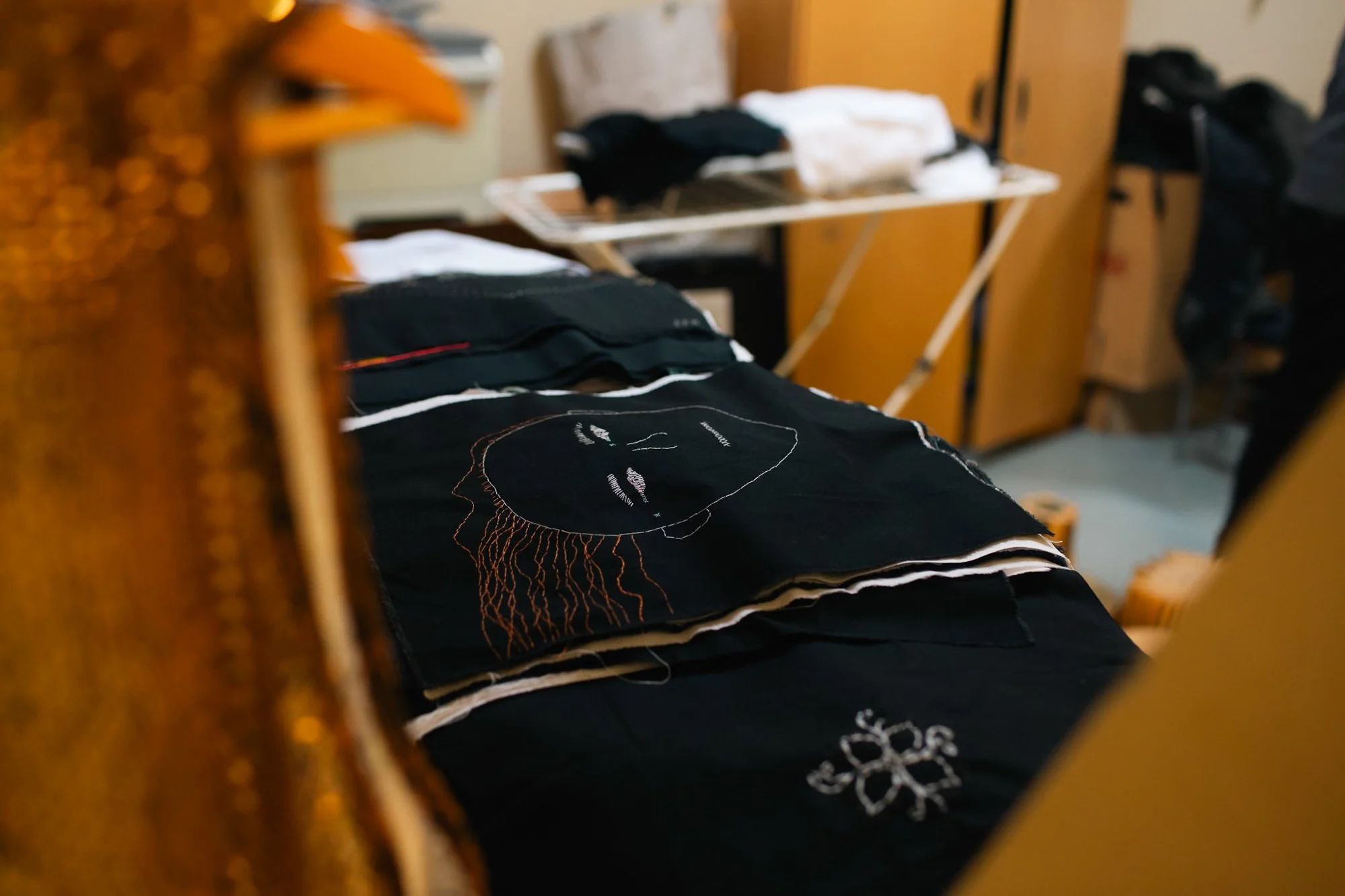
Walking down the corridor on the third floor of Kysten – Tromsø’s largest studio collective – I follow the music playing out loud from Marsil Andjelov Al-Mahamid’s studio. The artist welcomes me with coffee, tea and biscuits and we sit at a large oval table covered with yarn, fabric, scissors and embroideries piled up at its centre.
On the floor to the left lies a sculpture, an assemblage of wooden gears and wheels of different sizes and shapes, that somehow find a way to fit all together. In the right corner of the room, the wall displays a carefully arranged composition of colorful watercolours on paper.
– My daughter opened an exhibition in this corner 2 years ago. She loves to paint, so occasionally we invite some people over and hold the vernissage with her work here.
I quickly realise the double function of his studio: on one hand a place for production for the artist himself, on the other a gathering place. Here, Al-Mahamid hosts collective moments of experimentation and social exchange, something which I then learn to be quite central in his practice.
While visiting his studio we speak about his work, his family’s stories and world history, two intertwined narratives which the artist navigates with fluidity, tracing links between personal experiences and broader stories of war, repressions and displacement. He speaks openly and generously, never shying away from difficult topics.
Tracing the media
The diversity of materials in his studio sparks my curiosity. When I ask him about the media he works with, he explains that he moves between different materials depending on the situation and the nature of the project. Sculpture used to be his main medium. His first approach to it was while studying Industrial Engineering in Kikinda, Serbia. Back then, he worked part-time at Terra – Center for Large Terracotta Sculptures as a technical assistant for the Terracotta Sculpture Symposium. After the symposium, he continued working with students and helping to repair damaged works in the Terra Sculpture Park. Concurrently, he started creating his own large-scale sculptures, developing a deep appreciation for clay and the creative process it entails. He worked at Terra for several years while completing his degree in Industrial Engineering, an experience that marked the beginning of his artistic journey.
Since then, Al-Mahamid’s practice has shifted towards video and textile, which have become his media of preference. He tells me that he is currently working on a new installation combining video and textile centered on a serious accident he had in 2020. It left him in a medical coma for 18 days and hospitalized for more than two months. This project is an attempt to return to the painful hospital records from the event, the memories of which are still vivid, translating them into a new piece, while exploring a new direction for his work.
– I want to explore healing through my practice. This work is not only for me to reconcile with the experience, but also to bring hope to people who had incidents or illnesses and to show that the body can fight back and heal.
According to the artist, the work will touch on how the body and the cells can regenerate. Though revisiting his medical records remains emotionally heavy, he embraces the slow unfolding of the process without hurrying.
– I’m glad to be able to do this, even if it takes time, he says.
Between personal and collective: traumatic events as a starting point
Trauma – both personal and collective – runs as a red thread through much of Al-Mahamid’s practice. Violent historical moments and collective wounds are frequent subjects.
– Wars and their aftermath were always present in my upbringing, Al-Mahamid says.
He grew up in Serbia, former Yugoslavia, where the terrors of the Second World War still lingered.
– People were trying to re-build their lives, but the traumatic effects of the war were very present, he says.
His mother worked with the Red Cross, and he grew up hearing stories of her daily encounters with refugees in need of help, while his father is from Syria, another region deeply marked by conflicts. Displacement, alongside war, seems to be strongly intertwined with his family and his own experience.
– I haven’t set foot in Syria since 2008, when I last visited my father’s land. Many of my relatives used to live there, but I think all of them have left.
Al-Mahamid also experienced war first-hand in the 1990s through the conflicts with Kosovo and Bosnia. These experiences profoundly shaped his worldview and sparked his commitment to raising awareness about history, perpetrators' responsibility and the human cost of war. Art became a way to complexify events and reach people at their core.
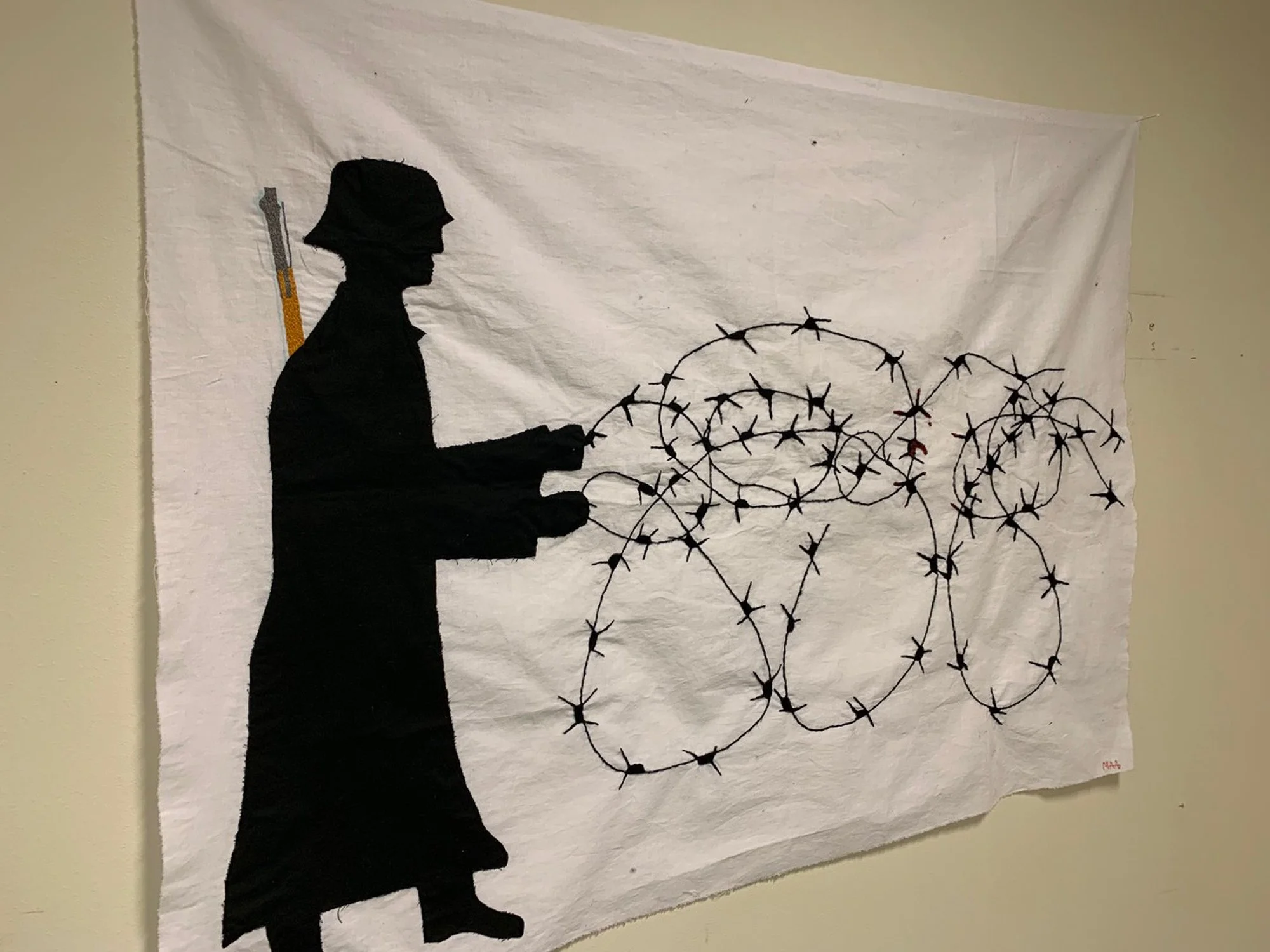
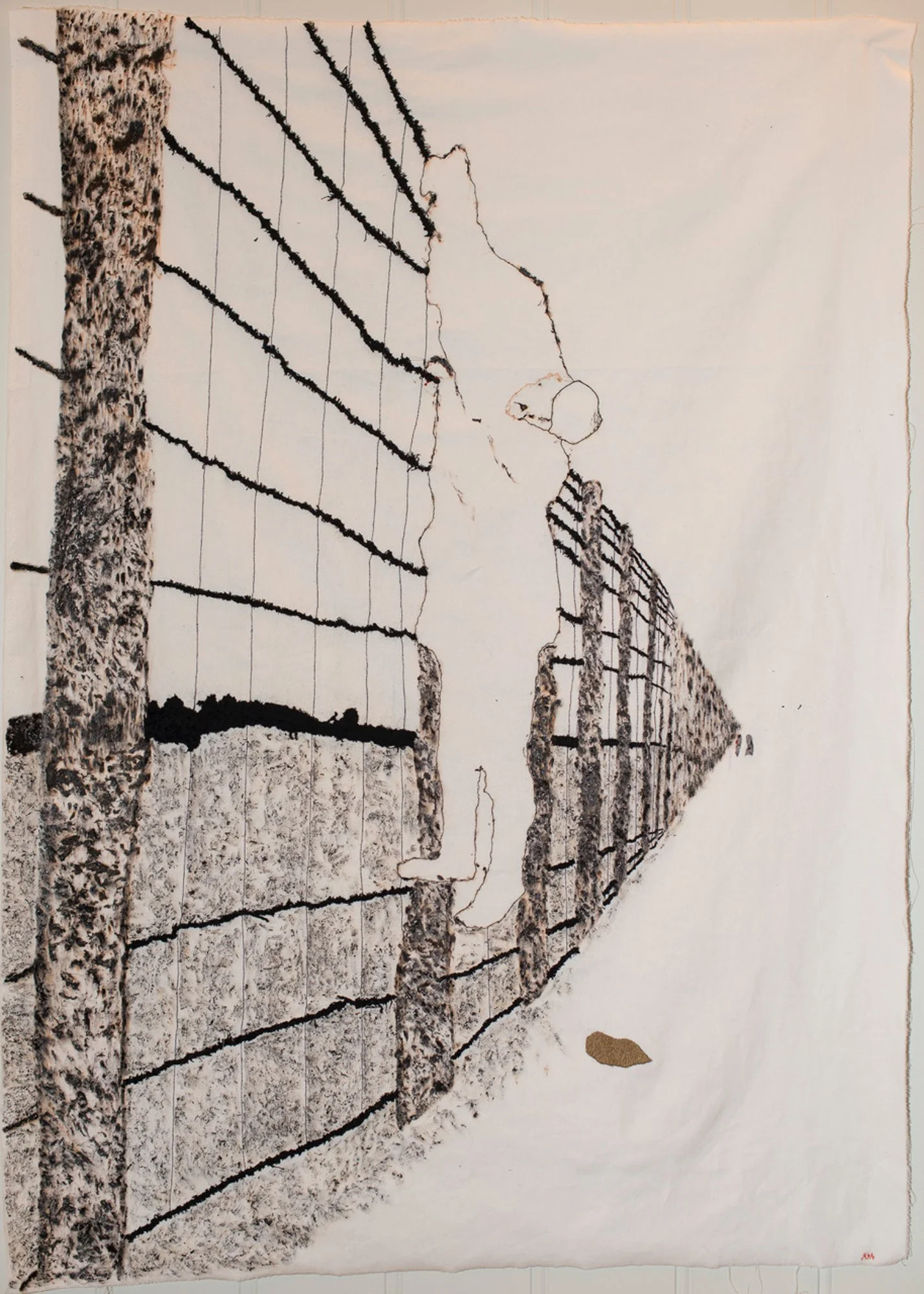
The artist’s background is key to grasp the motives behind his practice. Politically engaged, and historically grounded, his work often bridges the two countries he knows the most: Norway and Serbia. In his body of work, Remembrance, he explores a World War II concentration camp which used to be situated near Narvik, where 44 people from Kikinda were deported and almost all of them lost their lives. For Al-Mahamid, the stories connecting Serbia and Norway are both of personal and historical significance.
– The daughter of one of the few survivors from that camp is a family friend, I grew up with her, he tells me.
His urgency to tell such stories stems not only from ethical responsibility to preserve memory, but also from a personal need for healing. Al-Mahamid's work is an attempt to express the struggle between remembrance and renewal. Despite the historical topics, he does not adopt a documentary approach. Violence resonates in the work – not through graphic depiction, but as an emotional presence that invites empathy.
The invisible consequences of war
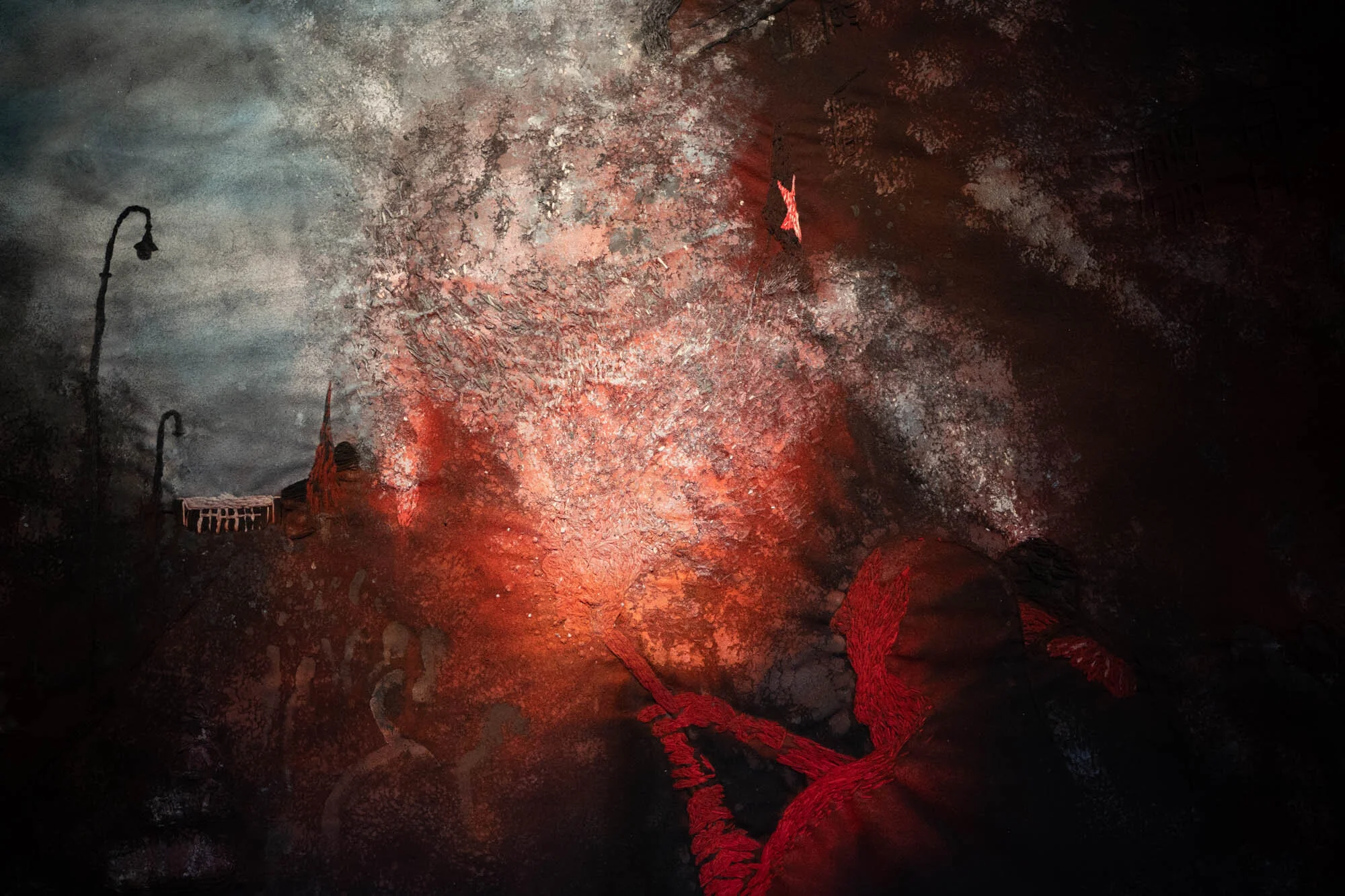
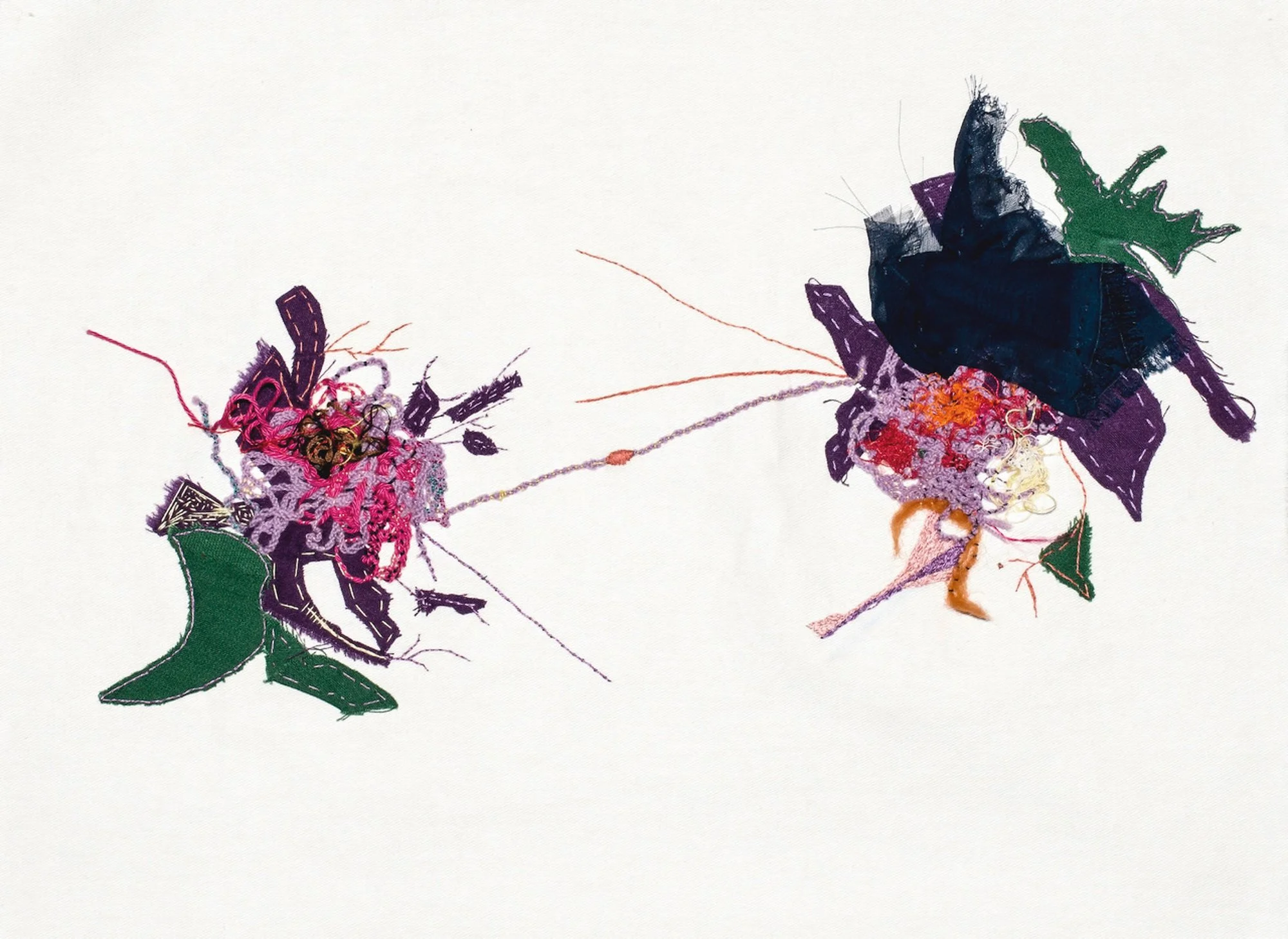
Al-Mahamid’s work Mutations (2024) was part of this year’s group exhibition Bodøhistorier at Nordlandsmuseet in Bodø. The series of embroideries explores the consequences on humans and the environment of NATO’s 1999 bombing on Serbia, which aimed to overthrow the tyrannical president Slobodan Milošević, a key figure within the Yugoslav wars. Through archival research, Al-Mahamid discovered pictures of the planes which bombed Kikinda: F-16 airplanes marked with a Norwegian flag on the tail. He tells me that these aircraft dropped more than 15 tons of depleted uranium bombs on Serbia , chemical weapons with devastating effects on human bodies. The artist was shocked by the fact that NATO would bomb the country with these weapons, as they affect anyone who breathes the particles released into the air after the explosions. In the decade following the bombing, Serbia recorded a surge in cancer rates and other illnesses linked to the uranium exposure, causing numerous deaths.
– These same weapons have also been used in other countries, like Libya, and they are currently used by Russia in the Ukrainian war, Al-Mahamid says.
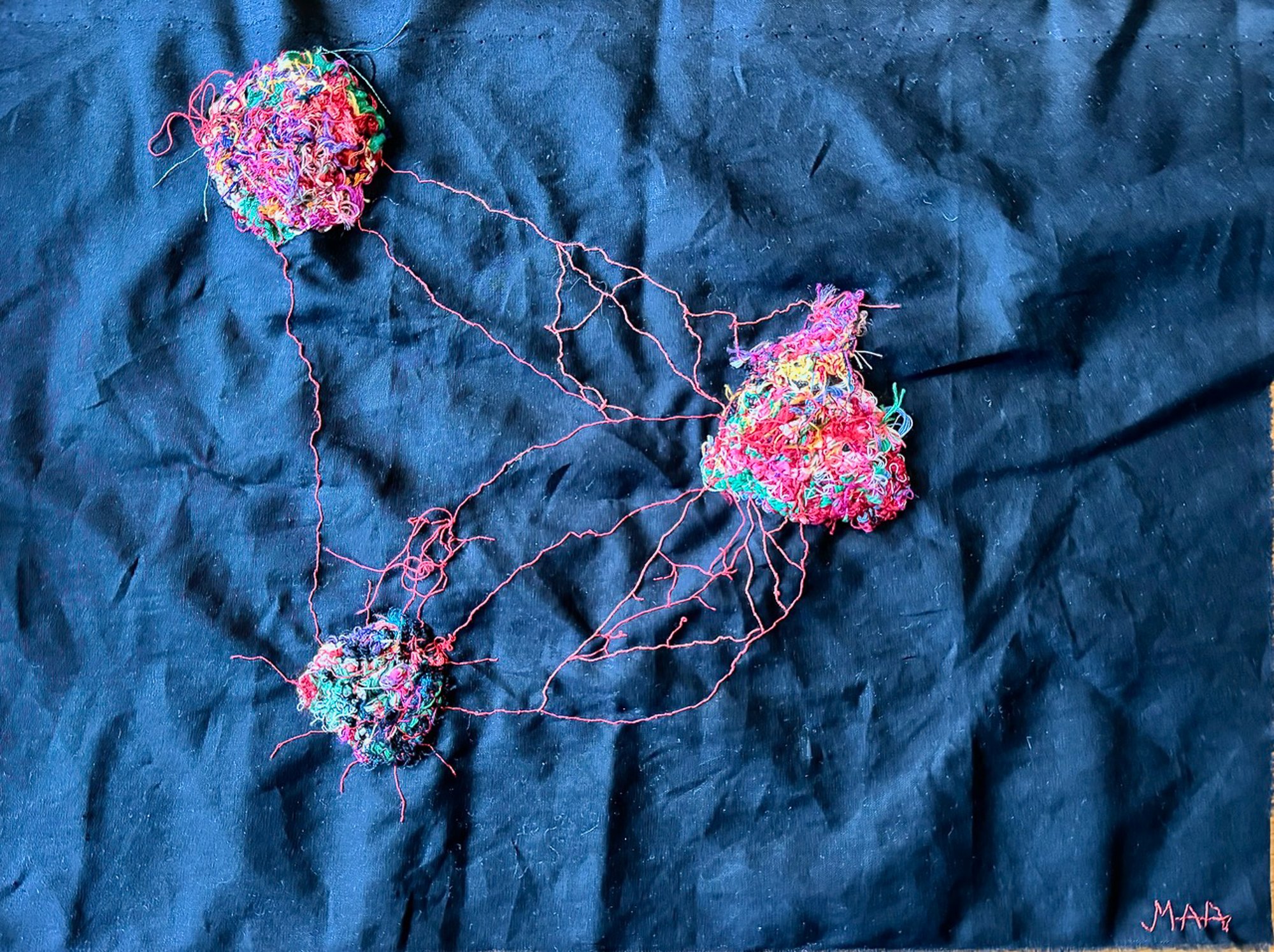
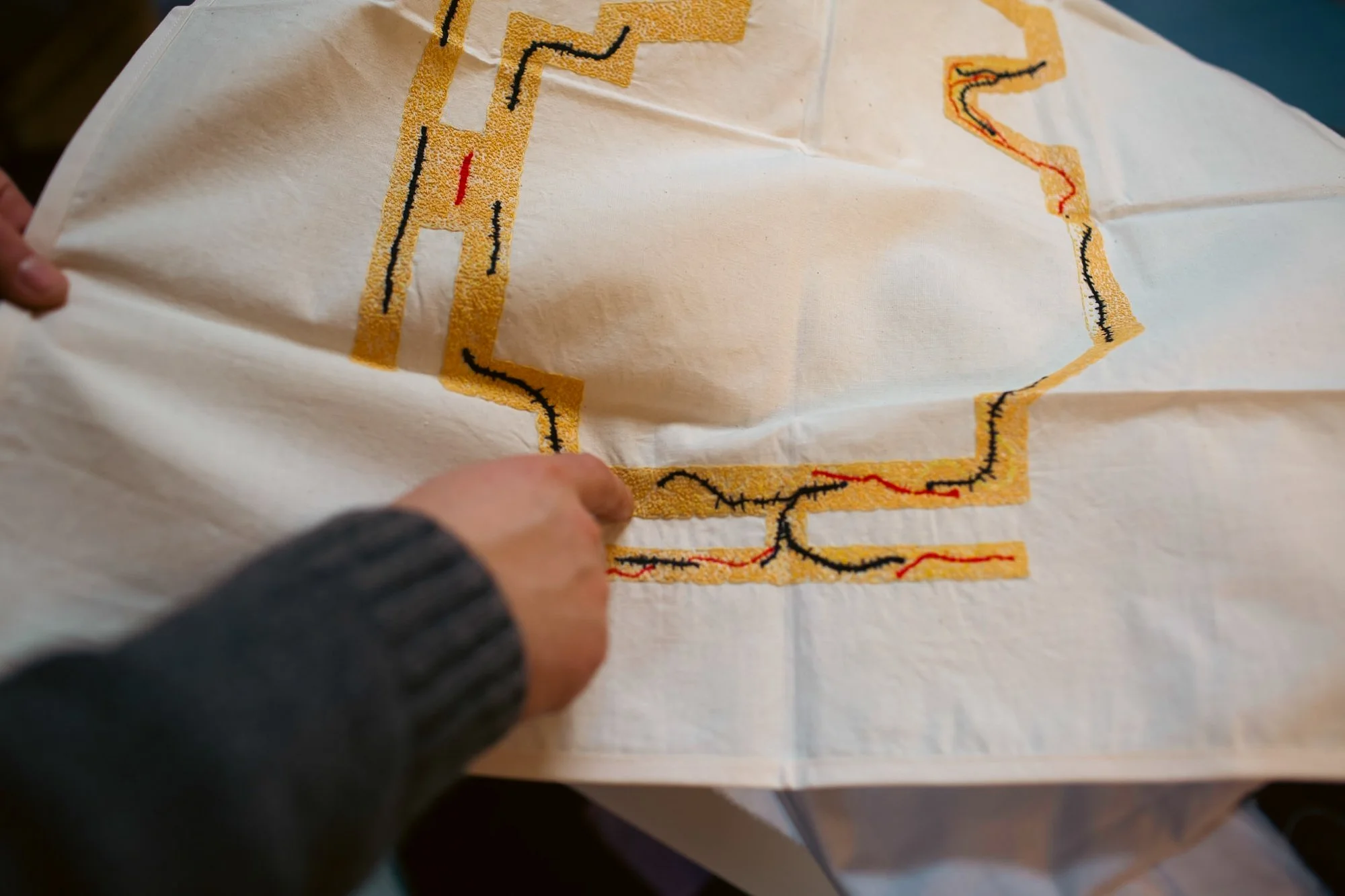
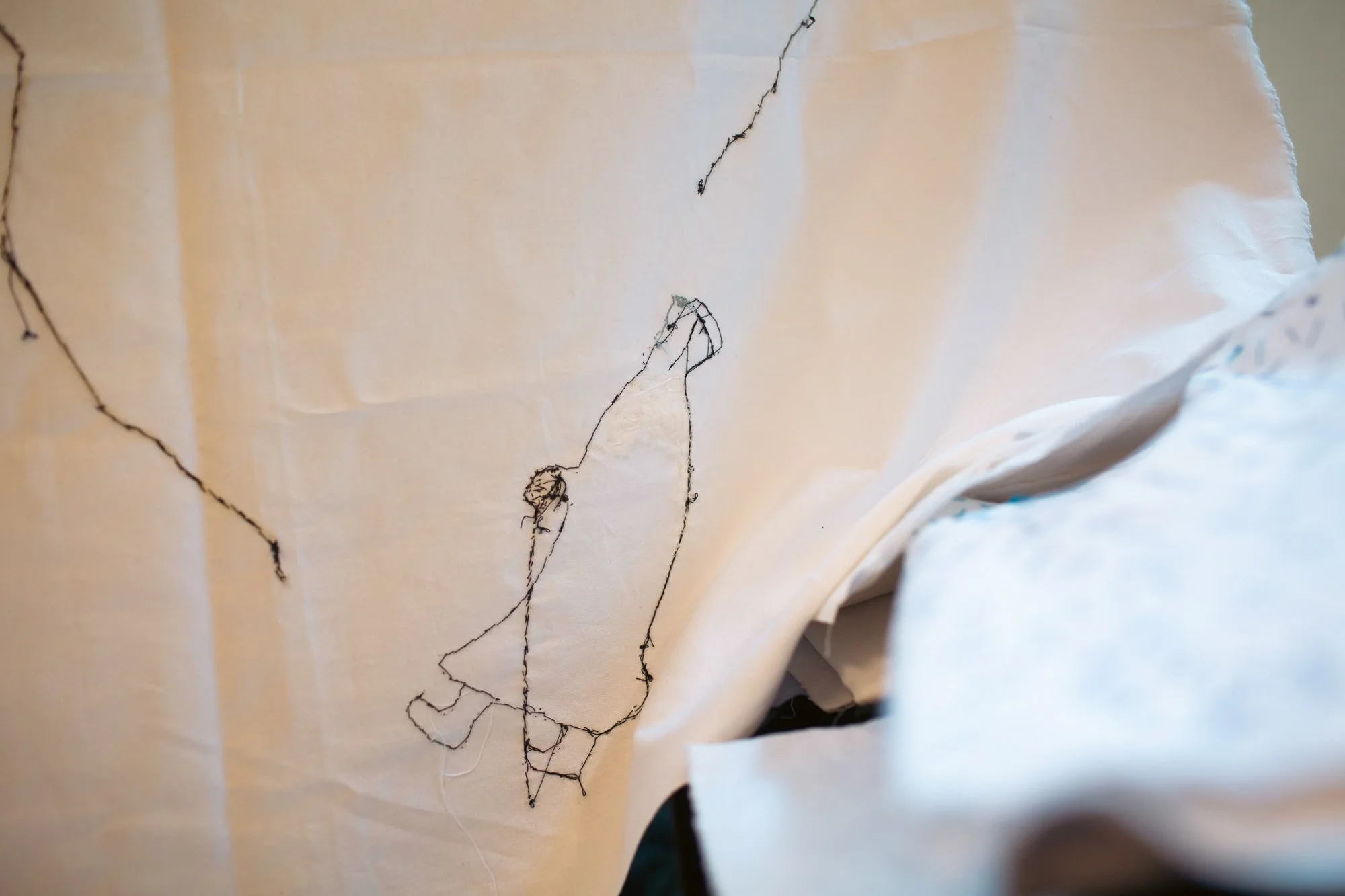
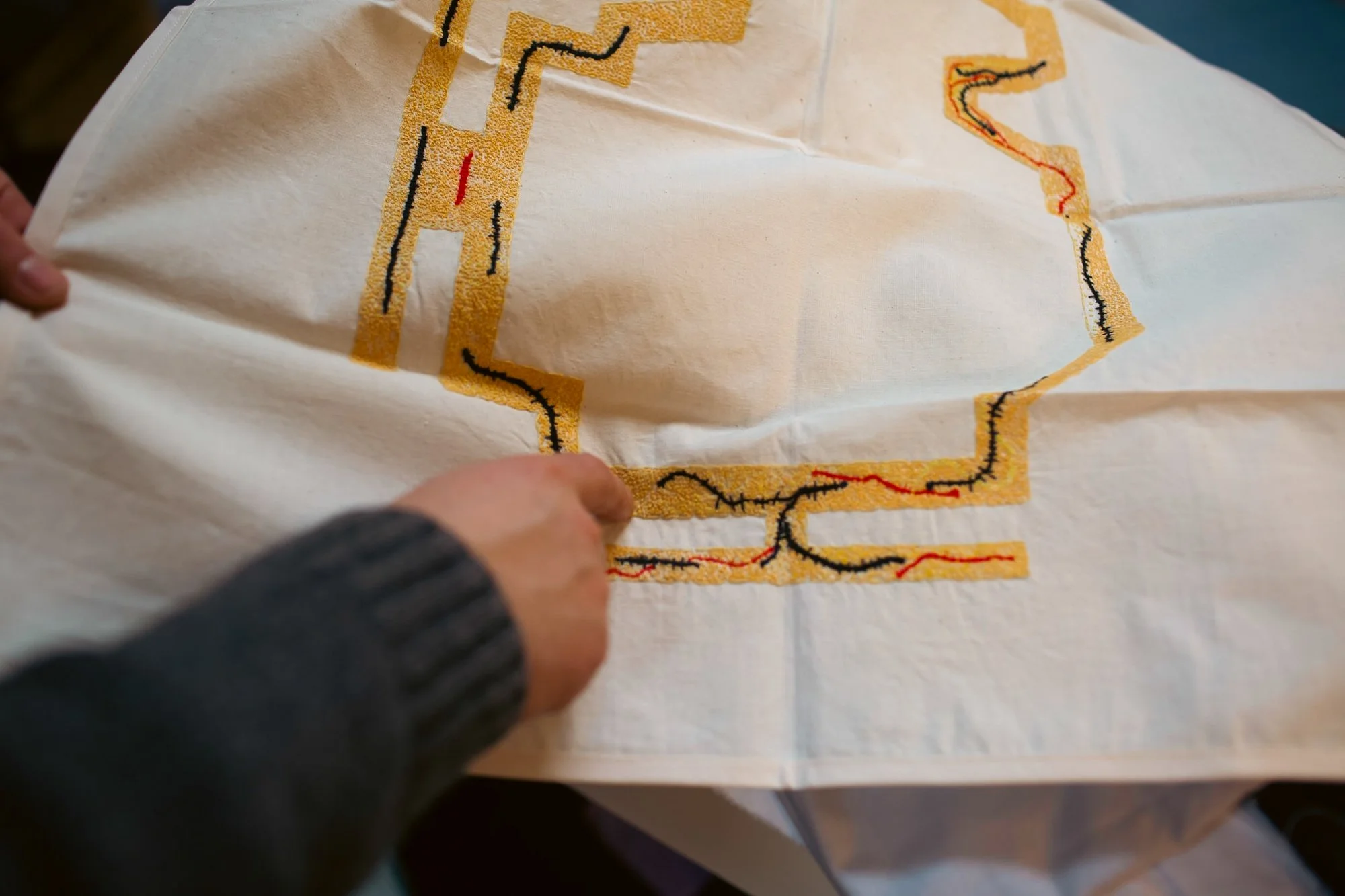
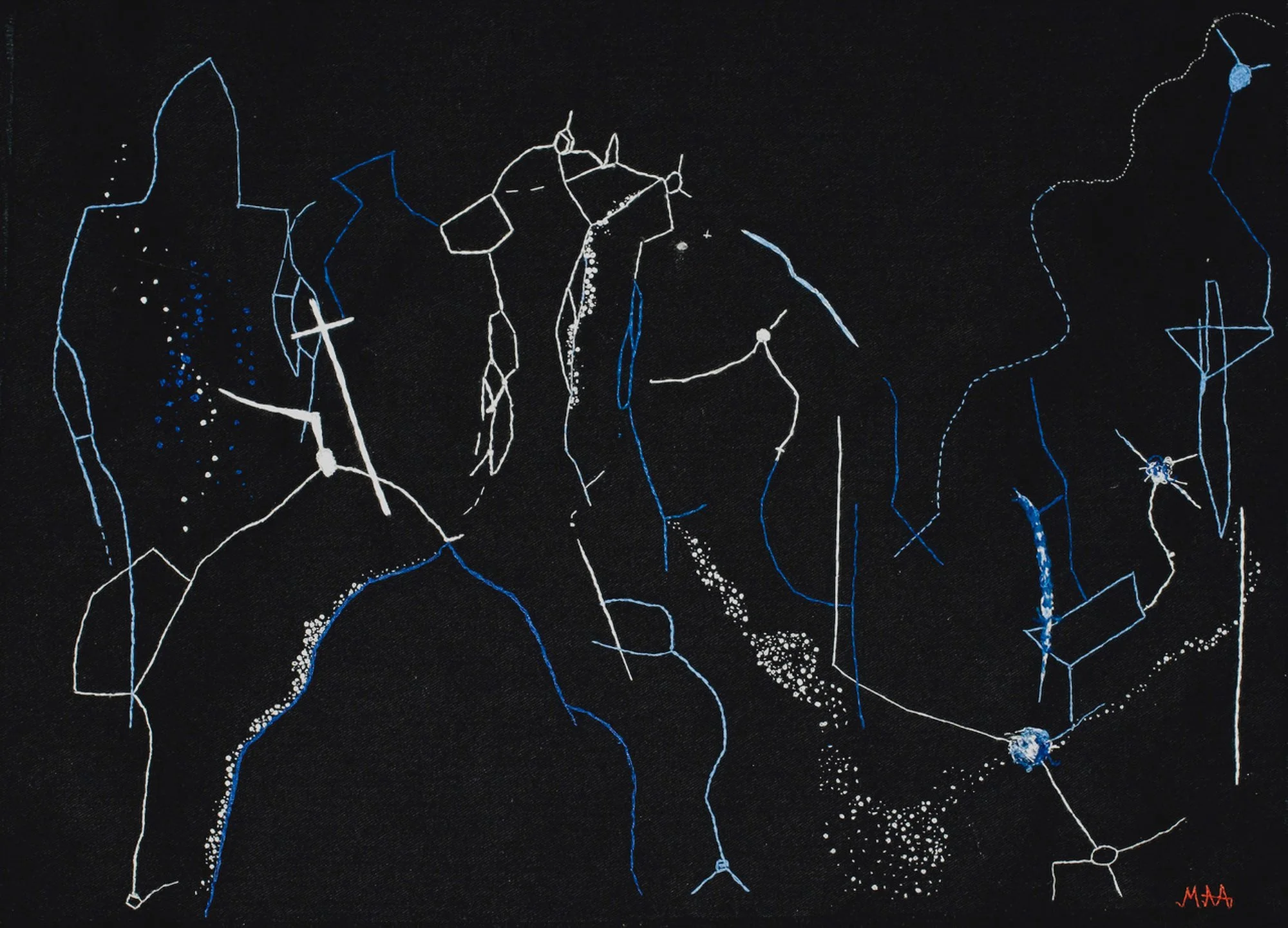
Mutation (2024) consists of a large textile depicting one of the F-16 planes with the Norwegian flag, accompanied by 22 smaller embroideries based on medical and scientific photographs showing the effects on uranium at a cellular level. At first glance, these look like abstract shapes but Al-Mahamid explains that they refer to very real processes – just like the number of people affected might sound abstract, but the lives lost to the uranium bombs are very real.
– There is also a NATO base in Bodø, so I feel like the artwork is in the right place, the artist adds, pleased with the idea that his work could confront those working at the base.
A social practice beyond exhibitions
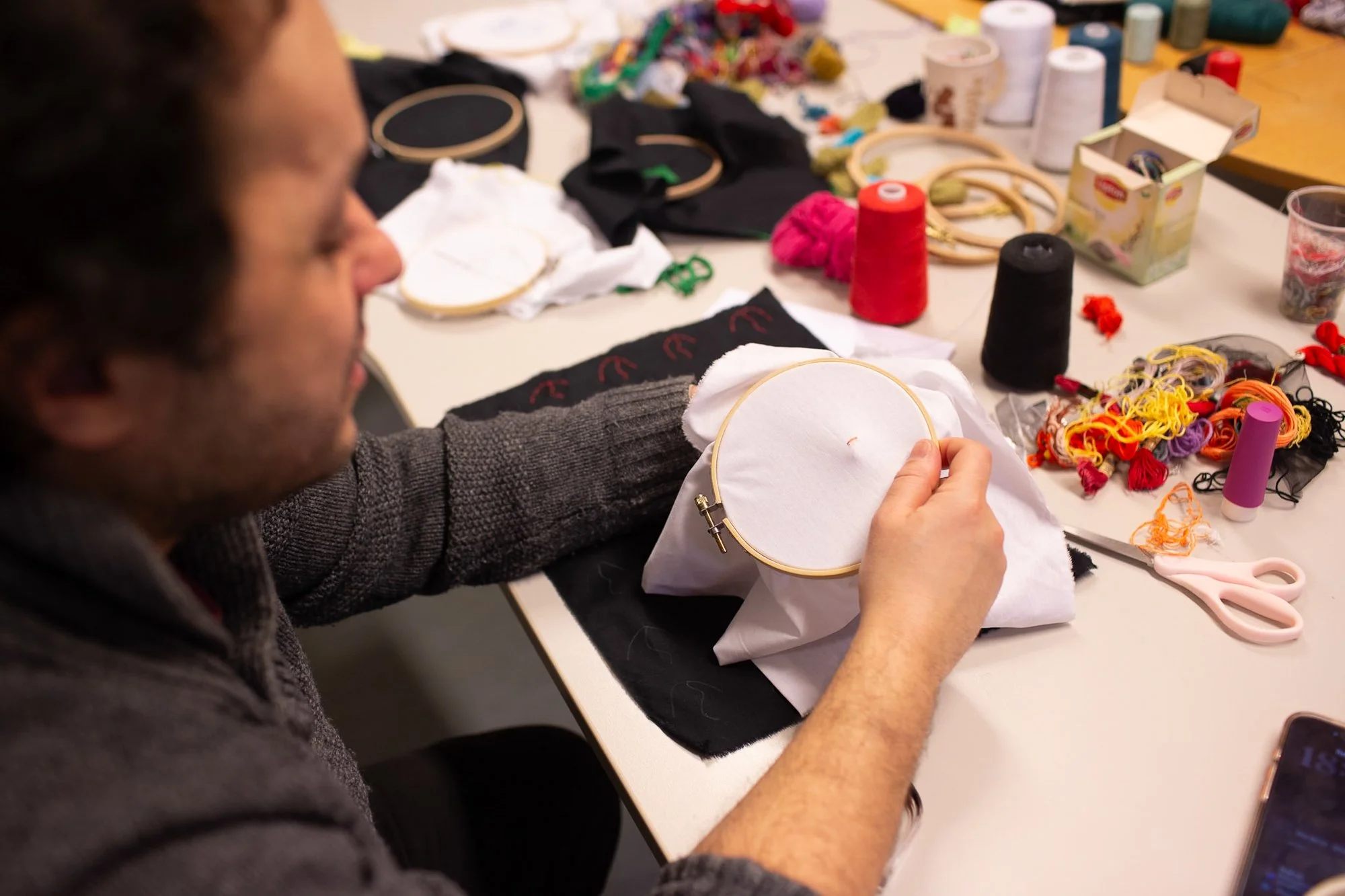
Al-Mahamid’s work extends beyond the gallery walls and people are often invited to participate. In fact, he has – for many years now – hosted a still ongoing embroidery workshop in his studio. It started in 2017, when he was involved in a project called Cit-egretion which ran until 2022. The project brought together a group of researchers, artists, creative businesses, refugees, voluntary associations and more, who joined forces to imagine cities where everyone is involved in the decision-making process, regardless of their ethnic background, exploring what could be the role of art and culture in this process. Throughout the project, he hosted workshops in different countries, inviting people to sit together at a table and embroider around the topic of “home”. When the Cit-egration project ended, Al-Mahamid decided to continue the workshop in his own studio in Tromsø, inviting local people. More than 700 people from over 35 countries have attended his workshop since he started it.
– In Tromsø, people come and go, some just once while others return. What remains constant is the diversity of the group: from refugees to students and people who are simply interested in textile and embroidery, Al-Mahamid explains.
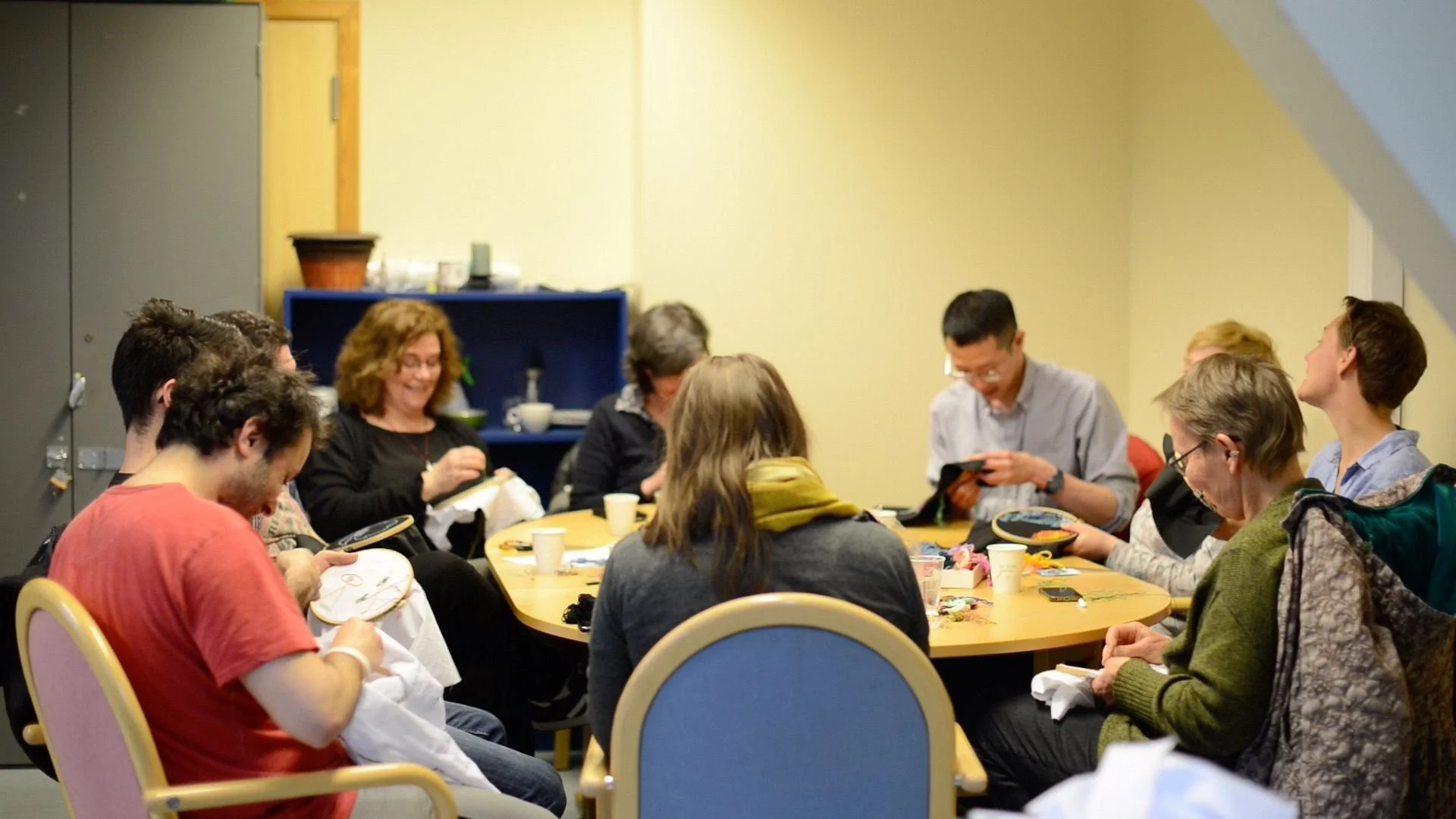
The artist’s studio turns into a meeting place where people are not required to speak a specific language. This too is important to Al-Mahamid.
– My studio becomes a space for people to use as they need, whether they want to practice their Norwegian, be in a pressure-free social environment, or just embroider. People can just sit and embroider - it doesn’t feel awkward to be quiet while working with your hands.
Promoting peace and societal change
When I ask him why creating space for social encounters matters so much to him, he speaks of his lifelong involvement with humanitarian work – during his mother’s civil service with the Red Cross, his own work at Terra, and his involvement with the Cigra organization for children with disabilities in Kikinda.
– I also worked with youth and the local community at the National Museum in Kikinda, as well as on many other projects. Growing up in Yugoslavia during the wars, I was deeply affected by their brutality and senselessness. Art became another way to continue my work within society promoting peace, which has always been an important part of my life.
As I leave Al-Mahamid’s studio, I carry with me a renewed sense of hope. In a world marked by violence – the genocide in Palestine, wars in Sudan and Congo, the ICE raids in the United States under Trump’s leadership, and the far right rising in parlaments across the globe – it’s easy to sink into despair. Yet, Al-Mahamid’s hospitality and generosity, his community-based practice alongside his work towards exposing violence show ways to create positive action with local communities, while fighting against systematic violence. His ability to hold space for both aspects, reminds us that opportunities of lightness and joy must be kept alive despite the dreadful stories on the news, and that the possibility of creating a different reality starts precisely here.